What “smart casual” actually means
Smart casual is the most-used and least-defined dress code in a man’s life. It shows up on wedding invitations, work emails, restaurant websites, and event pages, and almost none of them tell you what it means. So you stand in front of your wardrobe asking the same question thousands of men type into a search bar every day: what is smart casual for men, actually?
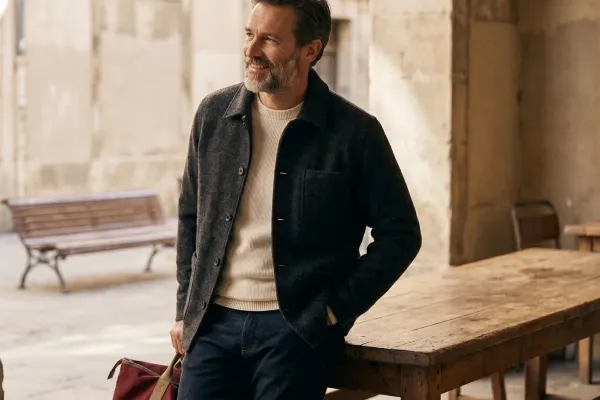
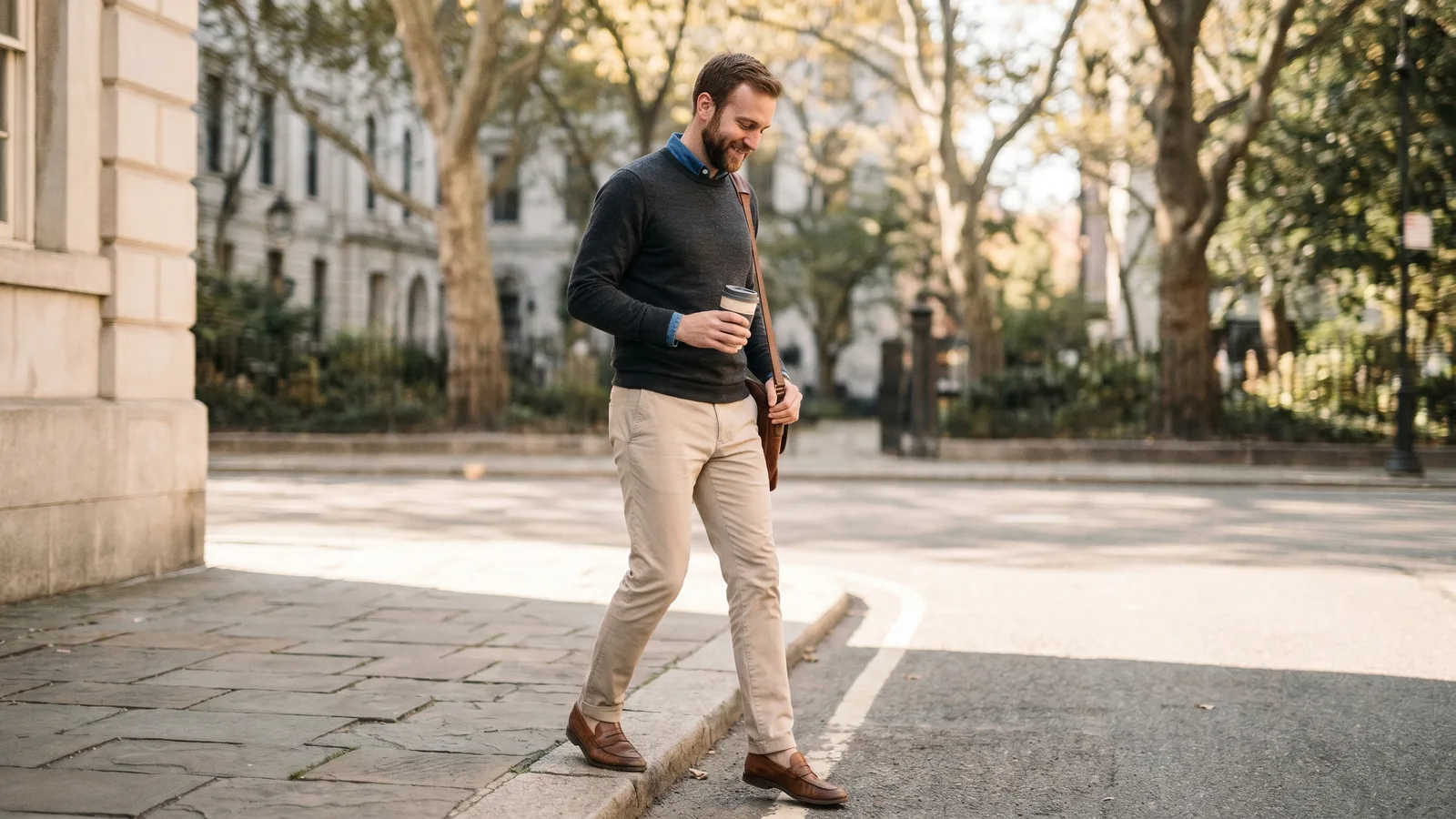
Here is the honest answer. Smart casual is the middle ground between everyday casual and business casual. It means clothes that are deliberate and put-together without being formal. You are not in a suit, and you are not in a hoodie and trainers. You are in pieces that look considered — a collared shirt, good knitwear, well-cut trousers or dark denim, clean shoes — combined so the whole outfit reads as intentional rather than thrown on.
The trick most guides miss is that smart casual is not one fixed outfit. It is a range. It stretches from “nice enough for a relaxed office” up to “polished enough for dinner out.” Where you land inside that range depends on the occasion, and learning to read that is the whole skill. This guide will make the range concrete: what the dress code means, how it differs from the codes on either side of it, the pieces it is built from, and the formulas that work every time.
Where smart casual sits between the other dress codes
The fastest way to understand smart casual is to place it on the ladder of how men dress, from most relaxed to most formal.
- Casual — T-shirts, jeans, sweatshirts, trainers. No structure required.
- Smart casual — collared shirts, knitwear, chinos or dark denim, blazers optional, clean sneakers or leather shoes. Looks deliberate, not stiff.
- Business casual — dress shirts, trousers, leather shoes, a blazer in many offices. Built for work. (We cover this in depth in our guide to business casual for men.)
- Business formal — a matched suit, dress shirt, tie, leather oxfords or derbies. The most formal everyday code.
Smart casual is the rung that confuses people because it overlaps with the ones above and below it. An outfit can be both smart casual and business casual at the same time — a navy blazer, a light blue shirt, and grey chinos qualifies on both counts. That overlap is exactly why “smart casual vs business casual” is one of the most-searched questions men have about getting dressed, and it deserves a clear answer.
Smart casual vs business casual
These two codes share most of the same wardrobe, so the difference is one of emphasis rather than entirely separate clothes.
Business casual is anchored to the office. It assumes a dress shirt and trousers as the baseline, often a blazer, and almost always proper leather shoes. It is conservative by design — it has to work in a meeting.
Smart casual is broader and a notch more relaxed. It happily accepts the things business casual is cautious about: knitwear instead of a dress shirt, dark denim instead of trousers, clean white sneakers instead of leather shoes. And it applies far beyond work — dinners, dates, events, and weekends all live under smart casual. The simplest mental model: smart casual is business casual with more room to breathe. If you can already dress business casual, you can dress smart casual by relaxing one element — swapping the leather shoes for clean sneakers, or the dress shirt for a fine-gauge knit.
Smart casual vs business formal
This one is cleaner. Business formal means a matched suit and a tie. Smart casual almost never does. A suit can edge into smart-casual territory only when you break it up — wearing the blazer with different trousers, losing the tie, opening the collar — at which point it stops being a suit and becomes separates. If an invitation says smart casual and you arrive in a full matched suit and tie, you have over-dressed. The dress code is asking for less than formal, not more.
The building blocks of a smart casual wardrobe
Smart casual is not about owning special clothes. It is about owning a handful of versatile pieces that combine well. Build the foundation and the outfits assemble themselves.
Shirts
The collared shirt is the workhorse of smart casual. An oxford-cloth button-down in white or light blue is the single most useful shirt a man can own; it dresses up under a blazer and down on its own with the sleeves rolled. A fine-gauge linen shirt covers warmer weather, and a dark or patterned shirt adds an evening option. Keep the fit clean through the body — not tight, not billowing. Knit polos in solid colors also count, especially at the more relaxed end. For a deeper look at choosing and wearing shirts well, see our guide to the business casual dress shirt, which applies directly here.
Knitwear
Knitwear is what most often tips an outfit from plain into smart casual, and it is the piece men underuse. A fine-gauge merino crewneck or a quarter-zip over a collared shirt instantly looks considered. A V-neck lets the shirt collar show. In colder months a heavier rollneck or a shawl-collar cardigan carries the whole look. Stick to solid, muted colors — navy, grey, charcoal, olive, oatmeal — and good materials, because cheap knitwear looks cheap faster than almost anything else in a wardrobe.
Trousers and denim
For the dressier end, chinos and wool trousers are your base. Chinos in stone, navy, olive, or grey are endlessly wearable; flat-front, no break or a slight break at the shoe. At the more relaxed end, dark denim earns its place — but only the right denim. The rule men keep asking about, can jeans be smart casual?, has a clean answer: dark, clean, well-fitted jeans in a uniform wash, yes; faded, ripped, or baggy jeans, no. Treat denim like trousers and it behaves like trousers. Our guide to business casual trousers and shoes goes deeper on cut, length, and fit.
Shoes
Footwear sets the dial on the whole outfit, which is why what shoes for smart casual? is such a common question. You have two reliable directions:
- Leather shoes — loafers, suede chukka or desert boots, Chelsea boots, or a clean derby. These push the outfit dressier and are the safe choice when in doubt.
- Clean sneakers — minimal leather sneakers in white or a neutral tone. These keep an outfit relaxed and modern, and they are the easiest way to stop a smart-casual look from feeling stuffy.
What does not work: bulky running shoes, heavily branded trainers, and anything scuffed or worn out. Smart casual lives or dies on the shoes looking clean, whichever direction you go.
The blazer
An unstructured navy blazer or a textured sport coat is the optional piece that does the most work. Thrown over a shirt and chinos, or over a knit and dark denim, it pulls an outfit firmly into “smart” territory in one move. Unstructured (soft shoulder, little or no lining) reads more casual than a stiff suit jacket, which is exactly what you want here. One good blazer multiplies the number of smart-casual outfits you can build from the rest of your wardrobe.
Smart casual outfit formulas
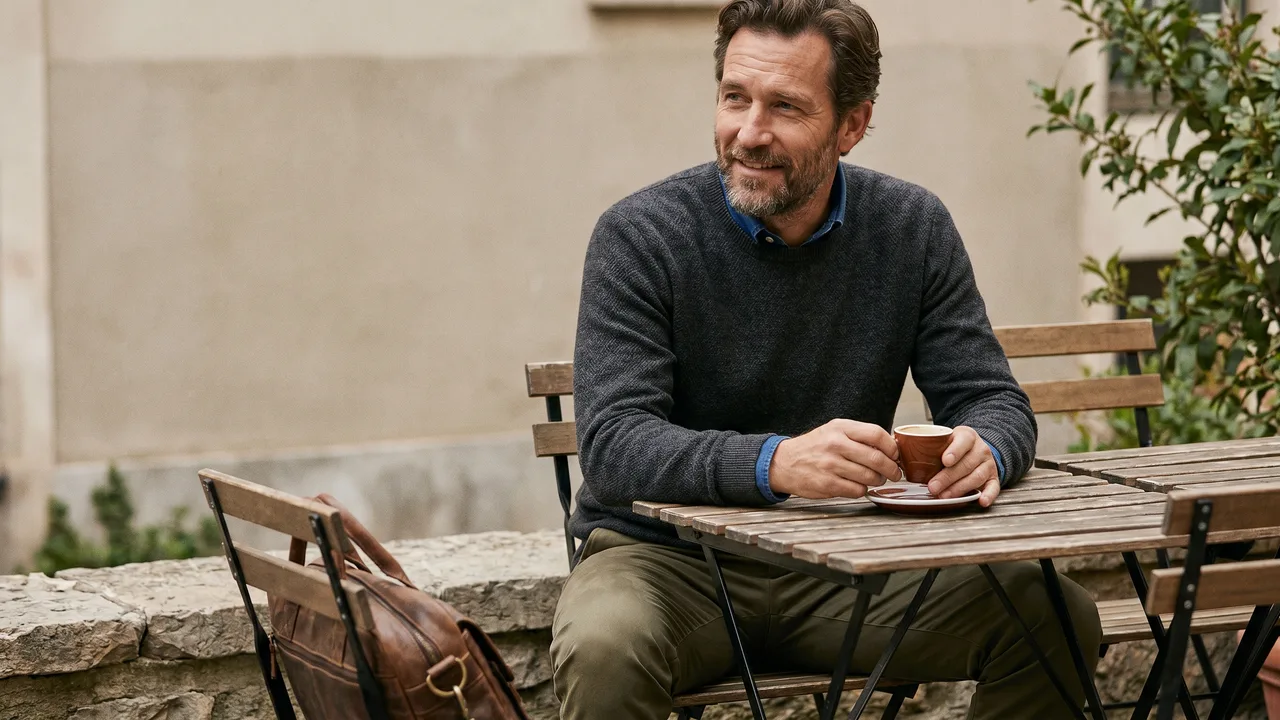
Once you know the pieces, the outfits are just combinations. Here are formulas across the range — from relaxed to dressier — that work without much thought.
- The relaxed baseline: dark denim + a fine knit over a collared shirt + clean white sneakers. The most forgiving smart-casual outfit there is.
- The everyday standard: chinos + an oxford shirt, sleeves rolled + suede loafers or chukka boots. Works for the office and a casual dinner alike.
- The dialed-up: grey wool trousers + a light blue shirt + a navy unstructured blazer + leather loafers. Reads polished without a tie.
- The cold-weather version: dark denim or charcoal trousers + a rollneck or shawl-collar cardigan + Chelsea boots. Smart casual handles winter easily.
- The warm-weather version: stone chinos + a linen shirt + clean sneakers or woven loafers. Light, but still deliberate.
The thread running through all of these: one smart element (a collar, a blazer, leather shoes, real knitwear) lifting one or two relaxed elements. That is the entire mechanism of smart casual. For many more worked examples and how to put them together, see our guide to smart casual outfits for men.
How to dress it up or down
Because smart casual is a range, the most useful skill is sliding along it on purpose. You do not need a different wardrobe to go dressier or more relaxed — you adjust a few levers.
To dress it up: add the blazer. Swap denim for wool trousers. Swap sneakers for leather shoes. Choose a crisp poplin shirt over a textured oxford. Each move nudges the outfit toward the formal end.
To dress it down: lose the blazer. Roll the sleeves. Swap leather shoes for clean sneakers. Trade the dress shirt for a knit polo or a crewneck. Each move relaxes the outfit without making it sloppy.
Because the pieces overlap, a single core wardrobe can produce a relaxed weekend look and a polished dinner look from largely the same items. That efficiency is the real argument for building around smart casual: it is the most versatile way a man can dress.
Reading the occasion
“Smart casual” means slightly different things depending on where you are wearing it. Match your spot on the range to the setting.
- At work. Smart casual at the office usually means the dressier end: collared shirts, knitwear, chinos or trousers, leather shoes or genuinely clean sneakers. Read the room before introducing denim, and when a meeting matters, dress up rather than down. (For interviews and higher-stakes work occasions, our business casual interview guide covers how far to push it.)
- Dinner and dates. This is smart casual’s home turf. A collared shirt or knit, good trousers or dark denim, and leather shoes or clean sneakers is exactly right. A blazer if the restaurant is nicer.
- Events and parties. Lean a touch dressier and add personality — a textured blazer, a knit polo, a darker palette in the evening. The point is to look pulled together while still looking relaxed.
- “Smart casual” on an invitation. When a host specifies it, they are asking you not to show up in a suit and not to show up in trainers and a tee. The everyday-standard formula above — chinos or dark denim, a collared shirt, a blazer or knit, clean shoes — is the safe center of the target. Skew slightly dressier if the event is evening or formal-adjacent.
The deeper breakdown of what the term means in each setting lives in our smart casual dress code, decoded and our explainer on the smart casual dress code for men.
Common smart casual mistakes
Most smart-casual misfires come from a handful of repeat offenders. Avoid these and you will clear the bar comfortably.
- Treating it as just “casual.” Smart casual is not the green light for a graphic tee and trainers. There has to be a smart element doing visible work — a collar, a blazer, real shoes, proper knitwear.
- The wrong jeans. Ripped, faded, or baggy denim sinks an outfit instantly. If you wear jeans, they must be dark, clean, and well-fitted.
- The wrong sneakers. Clean and minimal is the whole point. Chunky running shoes or scuffed trainers undo everything above them.
- Over-dressing. A full matched suit and tie is the opposite of what smart casual asks for. Break the suit up or leave it home.
- Ignoring fit. Smart casual rewards clothes that fit cleanly more than it rewards expensive labels. A modest wardrobe that fits well beats a costly one that doesn’t.
- No considered layer. A single shirt or single tee can read as unfinished. A knit, a blazer, or even rolled sleeves signals that the outfit was a choice.
The takeaway
Smart casual stops being confusing the moment you stop treating it as a fixed costume and start treating it as a range you control. Build a small wardrobe of versatile pieces — a couple of collared shirts, good knitwear, chinos and dark denim, clean shoes, one blazer — and you can dial any outfit from relaxed to polished by adjusting a lever or two. Add one smart element to lift the relaxed ones, read the occasion, keep your shoes clean, and you will land it every time. From there, the cluster guides below go deeper on decoding the code, building specific outfits, and handling it at work.