Outfits, not theory
You can read the definition of smart casual ten times and still freeze in front of the closet. The dress code lives in the assembly — which shirt with which trousers, which shoes finish it, what to add when the night turns dressier. This page is the assembly: a set of repeatable formulas you can run without second-guessing.
If you want the full breakdown of what the dress code means and where it sits between casual and business casual, the smart casual guide covers that ground. Here, we are building outfits.
The logic underneath every formula below is simple: smart casual is one well-chosen layer or one elevated material away from your everyday clothes. Once you internalize a few combinations, you stop assembling from scratch each morning and start running plays.
The core formula every man can run
Start here, because it works almost everywhere:
Tailored chinos + collared shirt or fine knit + clean leather shoes.
That is the engine. Chinos in stone, navy, or olive. A shirt with some structure — an oxford cloth button-down, or a merino polo if you want softer. Leather sneakers, loafers, or derbies on your feet. This combination is the reason smart casual feels hard until it suddenly doesn’t: once you own these three pieces in neutral colors, you can dress for most occasions in under a minute.
The variations are just swaps within that frame. Trade the chinos for dark denim and it relaxes. Trade the knit for a crisp white shirt and it sharpens. The skeleton stays the same.
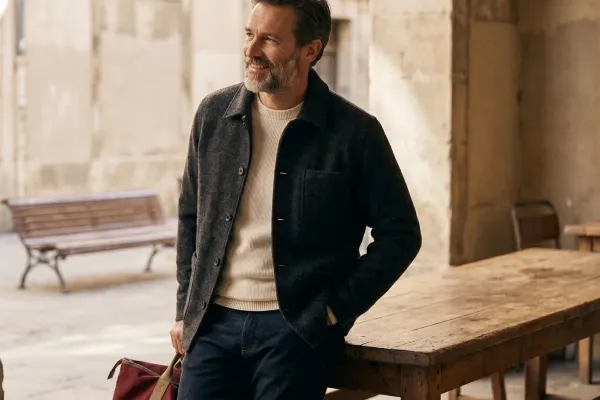
Add a jacket and you are done
If there is one move that separates men who look pulled together from men who look like they got dressed in the dark, it is the layer.
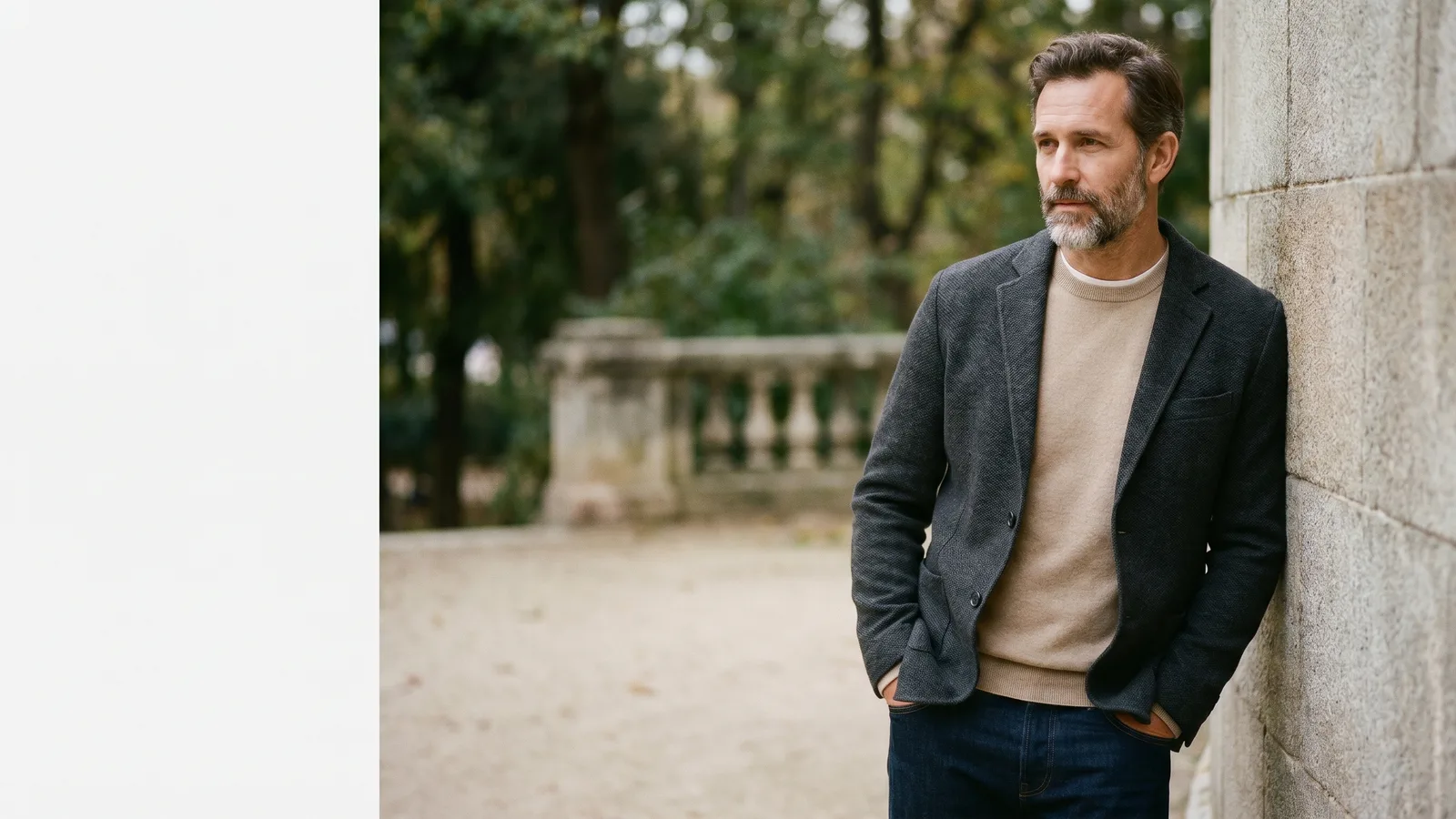
Unstructured blazer + t-shirt or knit + chinos or dark denim + leather sneakers or loafers.
An unstructured blazer — soft-shouldered, unlined, often in cotton, linen, or a textured wool — is the most useful smart casual garment you can own. Throw it over a plain white tee and suddenly the tee looks intentional. Throw it over a knit and you are dinner-ready. It does in one piece what nothing else in the wardrobe can: it signals effort instantly.
Keep the blazer in navy or a muted earth tone and it will pair with nearly everything else you own. This is the formula to reach for when the invitation leans toward the dressier end of smart casual.
The relaxed-but-sharp formula
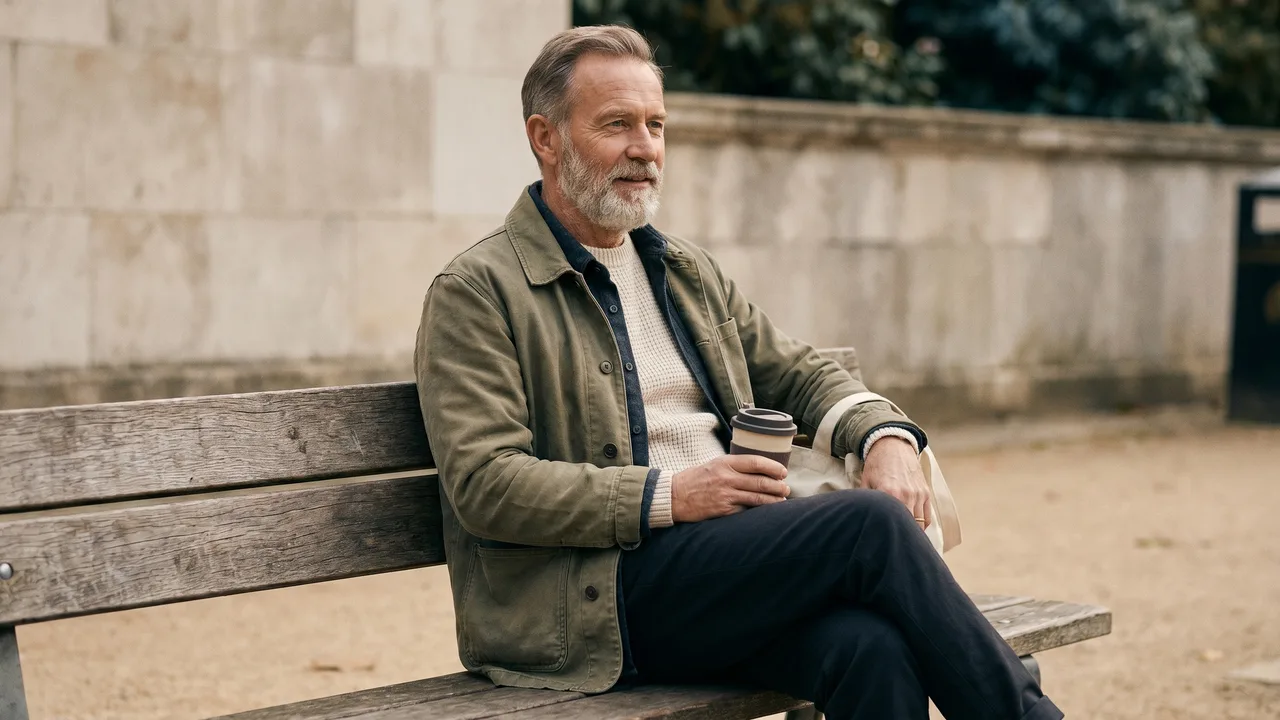
Not every smart casual occasion wants a jacket. For a casual dinner, a daytime event, or a relaxed office:
Fine-gauge sweater + dark denim or chinos + clean minimal sneakers.
A merino crewneck or a quarter-zip in a solid color does a lot of quiet work. The knit reads as deliberate, the dark denim keeps it grounded, and clean leather sneakers finish it without trying too hard. This is smart casual at its most livable — comfortable, modern, and impossible to overthink.
Layer a collared shirt under the sweater and let the collar peek out if you want to nudge it smarter. That single detail bridges relaxed and refined.
Dressing for the season
The formulas hold year-round; the materials shift.
Summer. Lean into breathable fabrics and lighter colors. A short-sleeve knit polo or a linen shirt, stone or light-gray chinos, and loafers worn without socks. If you need a layer, a linen or unstructured cotton blazer breathes where wool would not. Keep it light and let the fit do the work.
Winter. Build in layers that look chosen rather than bulky. A merino crewneck over a collared shirt, wool trousers or dark denim, and leather boots — a Chelsea or a clean derby. Finish with a structured overcoat or a heavy overshirt. The trick in cold weather is making warmth look intentional, not piled on.
Between seasons, an overshirt — that hybrid of shirt and light jacket — covers the gap and reads smart casual on its own.
A worked example for each setting
Formulas are easier to trust once you see them resolve into a specific outfit. Here is each play, dressed for a real occasion.
A relaxed weekend dinner. Navy fine-gauge crewneck, dark indigo denim, white leather sneakers, no socks showing. Comfortable, modern, and clearly put together — the knit and the clean denim carry it. This is the relaxed-but-sharp formula, doing nothing more than its job.
A casual office day. Stone chinos, a light-blue oxford cloth button-down with the sleeves left long, brown leather loafers. The collar provides the structure; the loafers provide the polish. No jacket needed, but the outfit would absorb one without complaint.
A client lunch or a date that might run dressy. Navy unstructured blazer, white t-shirt, gray wool trousers, dark leather sneakers or a clean loafer. This is the add-a-jacket formula at its most useful: relaxed enough that you are not stiff, sharp enough that you look like you planned it.
A summer rooftop gathering. Linen short-sleeve shirt in a muted color, light-stone chinos, woven loafers. Breathable, easy, and seasonally correct without reading as beachwear.
Notice that none of these introduce a new principle. They are the same three or four formulas, dressed in the right materials for the room.
The mistakes that quietly sink an outfit
Most smart casual outfits do not fail because of a bad idea. They fail on small, avoidable details:
- Too many statement pieces at once. A patterned shirt, a bold jacket, and loud shoes compete. Pick one focal point and let the rest support it.
- Footwear left as an afterthought. The outfit can be flawless from the ankle up and still collapse on scuffed or sporty shoes. Treat shoes as part of the plan, not the last thing you grab.
- Fit ignored on the trousers. Baggy or break-heavy trousers drag an outfit toward sloppy faster than almost anything. A clean taper does more for your silhouette than any new purchase.
- Trying to look casual and casual. A soft knit, soft trousers, and soft shoes with no firm element reads as loungewear. Every outfit needs one structured piece to earn the “smart” half.
Avoid those four and your formulas will land far more often than they miss.
What ties every outfit together
A few principles run underneath all of it, and they matter more than any single garment:
- Fit before everything. A modest outfit that fits beats an expensive one that doesn’t. If you fix one thing, fix the fit of your trousers and shoulders.
- Neutral base, one accent. Build on navy, gray, stone, and white, then add a single point of interest. Restraint reads as taste.
- Clean shoes, always. Footwear is where smart casual outfits quietly collapse. Leather, solid color, and genuinely clean is the standard.
- One elevating element. Every outfit needs one thing pulling it upward — the blazer, the structured shirt, the good boots. Identify it before you walk out.
Run these formulas a few times and they become reflex. For the definition and dress-code logic behind them, see the smart casual hub and our piece on decoding the smart casual dress code; for how the dress code shifts by setting, read what smart casual asks of you.