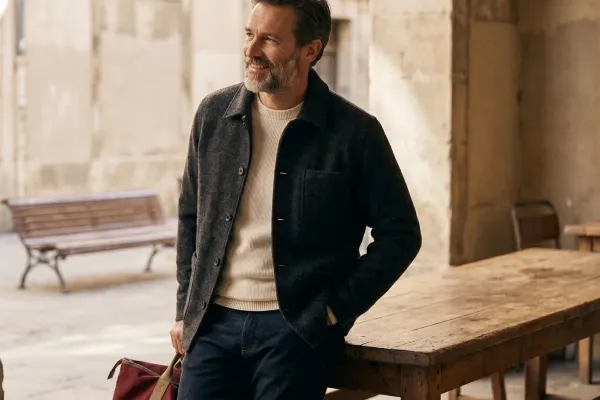
What the dress code is really asking
Most guides tell you what smart casual is. Fewer tell you what it expects — what you are actually being asked to do when those two words land in your inbox or on an invitation. That is the gap this page closes.
Because here is the thing: smart casual is less a list of clothes than a request. It asks you to look like you made an effort without looking like you tried too hard. It asks you to read the room and calibrate. And it asks you to clear a basic bar of polish that a lot of men miss not through bad taste but through inattention.
If you want the underlying definition and where the dress code sits relative to business casual, our smart casual guide lays that out. This page is about the demands the dress code places on you, occasion by occasion, and how to meet them.
The bar you have to clear
Before any specific setting, smart casual asks three things of every outfit. Meet these and you are most of the way there regardless of where you are going:
- Look deliberate. Every piece should appear chosen, not defaulted to. This is the entire spirit of the dress code.
- Show structure. At least one element — a collar, a jacket, tailored trousers, leather shoes — should carry some formality. Pure softness reads as casual; one firm element pulls the outfit up.
- Be impeccably maintained. Pressed, clean, unscuffed, properly fitted. The dress code is far less forgiving of neglect than it is of a modest wardrobe.
Almost every smart casual failure traces back to one of these going unmet. Notice that none of them require expensive clothes. They require attention.
What it asks at the office
In a workplace, smart casual asks you to land near its dressier end. The unspoken expectation is that you look professional first and relaxed second.
That means a collared shirt or a fine-gauge knit, chinos or wool trousers, and leather shoes. On days with meetings, presentations, or clients, the dress code effectively asks for a blazer, even if no one says so. The jacket is the difference between looking like you happen to work there and looking like you run the room.
The governing principle at work is simple: when in doubt, dress one notch up. Being slightly overdressed in a professional setting reads as respect and seriousness. Being underdressed quietly undermines you, no matter how good your work is.
What it asks in a business meeting
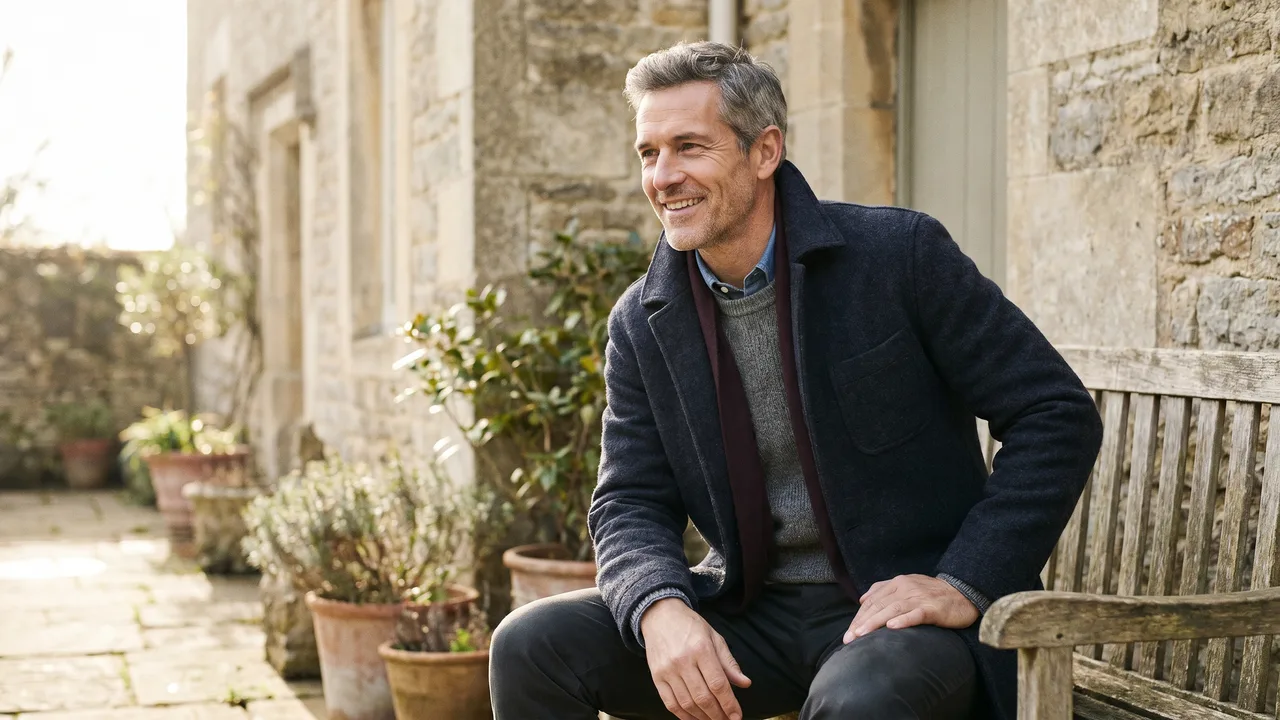
A business meeting tightens the request further. Here, smart casual is asking you to look prepared.
Reach for the formal edge of the range. A blazer is close to mandatory. Choose a collared shirt over a t-shirt. Wear leather shoes rather than sneakers. The point is not stiffness — it is signaling that you take the meeting seriously enough to have thought about how you show up.
There is a real cost to getting this wrong in either direction. Underdress and you risk looking like you didn’t prioritize the room. Overdress dramatically and you can look out of step. The blazer-shirt-trousers-leather combination threads that needle for nearly any meeting labeled smart casual.
What it asks at dinner and social events
Socially, the dress code relaxes its grip and asks something different: show some taste.
At a restaurant, a gathering, or a casual evening out, you have room to drop the jacket and let personality through. A well-fitting knit, dark denim or chinos, and clean leather shoes is plenty. This is where the “casual” half of the phrase earns its keep — you are allowed to look comfortable, as long as you still look considered.
For a wedding or a dressier event tagged smart casual, swing back toward the formal end: a blazer is expected, closed leather shoes over sneakers, often a collared shirt. The “casual” there is mostly excusing you from a full suit and tie — not from effort.
What it asks of your wardrobe
The dress code also makes a quieter, longer-term request: that you own a handful of pieces flexible enough to answer it on short notice. Smart casual rewards the man who can reach into his closet and meet any version of the prompt without a shopping trip.
You do not need much. A working smart casual wardrobe asks for:
- One reliable layer. An unstructured blazer in navy or a muted earth tone. It is the piece that does the most across the widest range of occasions, and it is the one most men skip.
- Two or three versatile tops. An oxford cloth button-down, a fine-gauge merino knit, and a clean t-shirt that fits well enough to wear under the blazer.
- Two reliable bottoms. Tailored chinos in a neutral and a pair of dark, unfaded jeans or wool trousers.
- Two pairs of shoes. Clean leather sneakers for the relaxed end and a loafer, derby, or Chelsea boot for the dressier end.
That is roughly nine pieces, and they recombine into nearly every smart casual outfit you’ll be asked for. The dress code is far easier to satisfy when you have already answered it once, in advance, by choosing well. For the specific combinations these pieces make, our guide to smart casual outfits that work walks through the formulas.
How to meet it when you can’t read the room
Sometimes the prompt gives you nothing. The setting is ambiguous, you don’t know the crowd, and “smart casual” is doing no work to help.
Two reliable moves:
First, ask if you can. A quick question to the host or a colleague — “what are people wearing?” — removes the guesswork entirely and signals you care about getting it right. There is no downside.
Second, when you can’t ask, default upward. A tailored layer, clean trousers or dark denim, and good leather shoes clears the bar in nearly every smart casual room you’ll be asked to enter. You can always remove a blazer if you’ve overshot; you can’t conjure one if you’ve come up short.
Reading the unwritten cues
Part of meeting a smart casual dress code is picking up on signals nobody states outright. The invitation rarely tells you everything; the surrounding details usually do.
Who is hosting and why. A dinner thrown by a design studio asks for something different than one thrown by a law firm, even under identical wording. The character of the host hints at the character of the room.
The venue. A wood-paneled restaurant, a rooftop bar, and a colleague’s backyard each carry their own register. Look up where you are going; the setting often resolves the ambiguity on its own.
The time of day. Evening events tend to ask for a touch more polish than daytime ones. The same “smart casual” prompt leans dressier after dark.
What the occasion is for. A celebration invites a little more effort than a routine catch-up. The stakes of the event quietly set the bar for how much you should bring.
None of these are rules. They are the context the dress code expects you to read. A man who notices them rarely misjudges the room, because he is responding to the actual situation rather than to two vague words on a screen.
That is what the dress code asks, in the end: a little reading, a little calibration, and a baseline of care. Meet those and you’ll never be the man wondering whether he got it wrong. For the outfit formulas that put this into practice, see our guide to smart casual outfits that work, and for the dress code decoded from the ground up, read the smart casual dress code, explained.