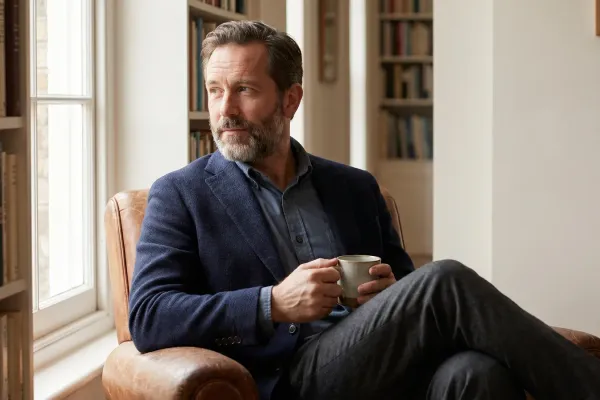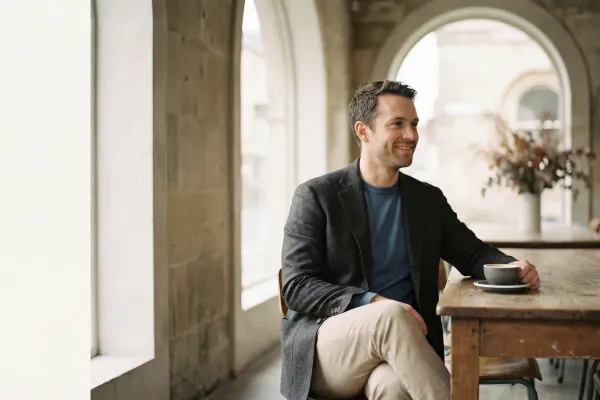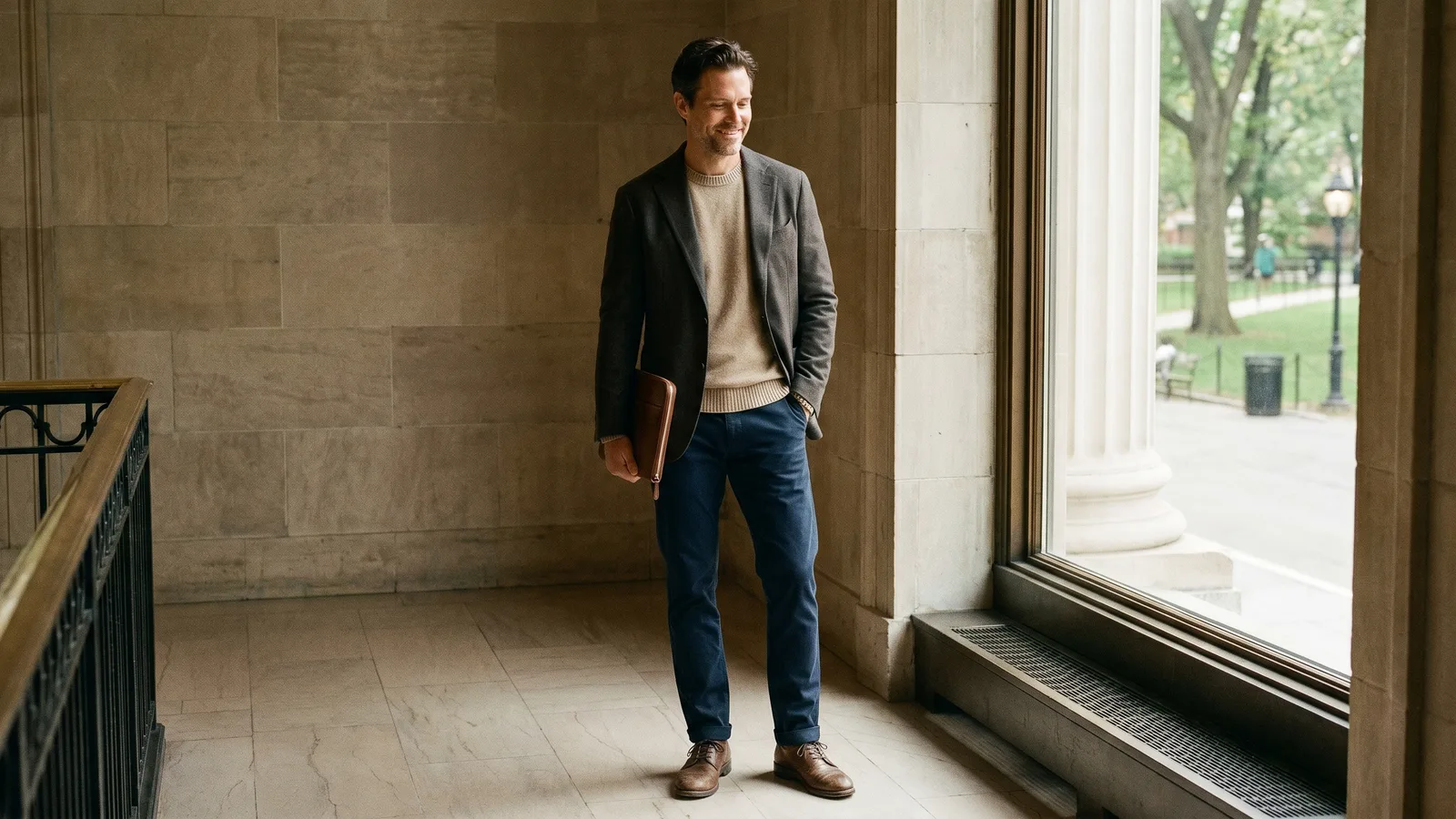
When the instruction says “smart casual”
Being told an interview is “smart casual” lands differently than “business casual.” It sounds more relaxed, which is exactly why it makes men nervous — how relaxed is too relaxed? The phrase invites the same questions every time: is it the same as business casual, can I drop the jacket, will a sweater look like I didn’t try? This guide is about reading that specific cue and building an outfit that lands on the right side of it.
Smart casual is its own register, and an interview raises the stakes on getting it right. The good news is that it’s a friendly target once you understand where it sits relative to the dress codes around it. For how interview dressing works more broadly, the interview dress hub is the anchor; this page zooms in on the smart casual end.
Where smart casual sits
Picture a ladder of dress codes. At the top, formal and business formal — suits. Below that, business casual — typically a blazer with a collared shirt, no tie required. One rung lower sits smart casual: still polished, still deliberate, but it loosens the structure. The blazer becomes optional. A fine knit can carry the outfit. The clothes are refined, but the silhouette breathes a little more.
The key word in “smart casual” is smart. It does the governing. Casual sets the relaxation; smart sets the floor. Nothing sloppy, nothing you’d wear to run errands — just polished pieces worn with a touch less formality. For an interview, you read smart casual as “put-together, possibly without a jacket,” and you lean toward the smart end rather than the casual one.
The smart casual interview formula
Build the outfit around a refined top half that doesn’t depend on a blazer:
- A collared shirt or a fine-gauge knit. A crisp button-up works; so does a thin merino crewneck or quarter-zip over a collared shirt. Either reads as deliberate.
- Well-fitted chinos or wool trousers in a neutral — navy, charcoal, stone, olive.
- Clean leather shoes — loafers, derbies, or minimalist leather sneakers.
- A blazer, optional but smart to bring. Carry it; you can add it if the room turns out more formal than expected.
That gives you a complete look that honors “casual” without sacrificing “smart.” For the piece-by-piece logic behind each component, the interview attire breakdown lays out the fits and swaps in full.
The knit is your best friend here
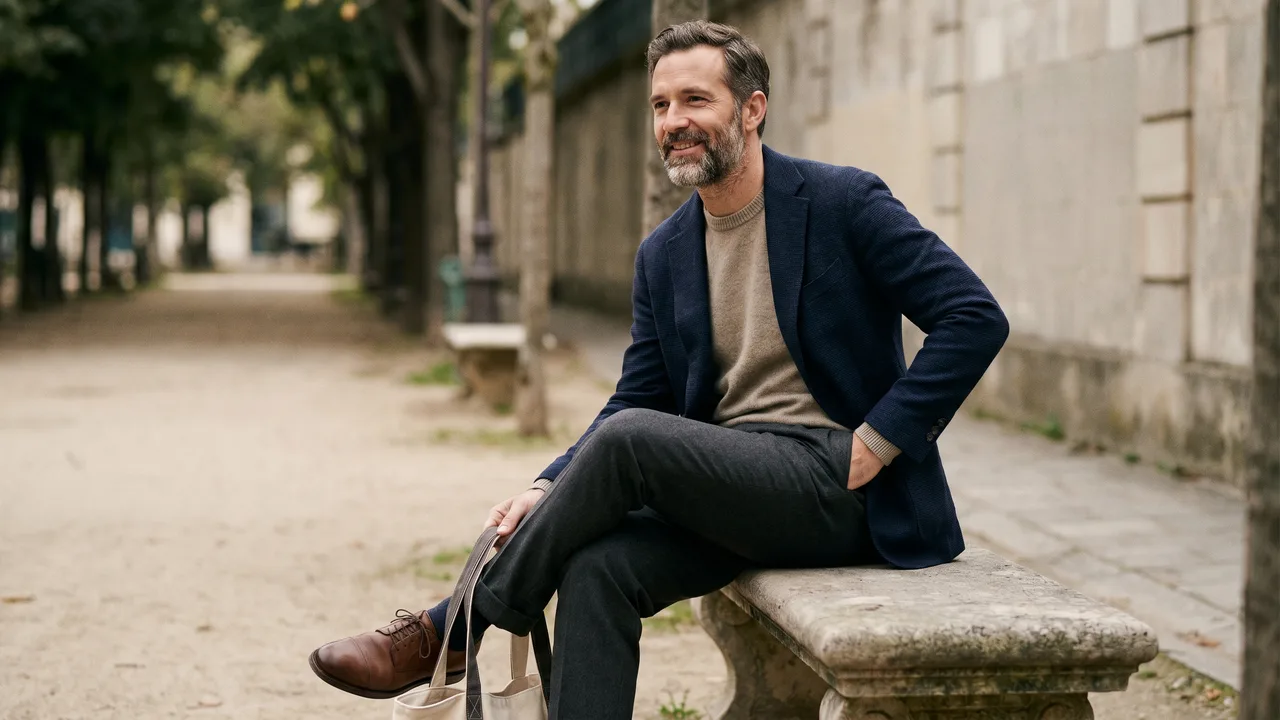
The single piece that defines a strong smart casual interview look is the fine-gauge sweater. A thin merino crewneck over a collared shirt — collar and a hint of cuff peeking out — is polished, current, and unmistakably deliberate. It threads the needle: dressier than a shirt alone, softer than a blazer, exactly the register “smart casual” is asking for.
Keep it solid and keep it fitted. Avoid chunky cable knits, anything with a logo, and hoodies of any kind. The sweater should read refined, not like loungewear. A quarter-zip in fine merino works the same way and reads slightly sharper if you prefer a collar line.
Lean smart, not casual
Here’s the calibration that matters most for an interview: when in doubt, push toward the smart end of smart casual. The instruction gives you permission to relax, but an interview is not the moment to use all of it. Dress as though “smart casual” meant “the polished version,” and you’ll never be the underdressed candidate.
In practice that means: choose the crisper shirt over the softer one, the trouser over the chino if you own both, the leather loafer over the sneaker if you’re unsure of the room. None of these make you overdressed. All of them keep you safely on the right side of the line.
What to avoid
Smart casual’s looseness invites a few specific mistakes:
- Jeans. Even though smart casual sometimes permits dark denim in daily life, skip them for the interview. Chinos carry the same ease with none of the risk.
- T-shirts, even under a blazer. A collar is what keeps the look “smart.” Honor it.
- Sneakers that are athletic rather than leather. Canvas and running shoes pull the outfit down a rung you don’t want to drop.
- Over-relaxing. The most common smart casual interview error is reading the cue as “casual” and arriving a notch too low. When unsure, go up.
Smart casual by setting
“Smart casual” doesn’t mean quite the same thing in every room, so a quick read of the company sharpens the outfit further.
At a tech or startup interview, smart casual is the native dialect — and the fine-knit-over-collar look is close to perfect here. Pair it with good chinos and clean leather sneakers or loafers and you read as both current and serious. This is the one setting where you can comfortably skip the blazer and not feel underdressed.
At a corporate or mid-size company, a smart casual instruction usually means they don’t expect a suit — but they do expect polish. Lean toward the crisp collared shirt, add the blazer if you own one, and choose trousers over chinos if you’re deciding. You’re aiming for the dressier edge of smart casual here.
At a creative or media interview, you have a little room for personality through texture and fit — a knit with some character, well-considered footwear — but keep color and pattern disciplined. Polish still does the persuading; the looser register just lets you show some point of view in how the pieces fit and combine.
In every case the rule from the broader interview edition for men still governs: read the company, then dress a notch up from its daily norm. Smart casual simply sets where that notch starts.
Fit carries the whole look
Because smart casual often drops the blazer — the most structuring piece a man can wear — fit matters even more than usual. A jacket can rescue a mediocre shirt; without one, the shirt and trousers are doing all the work, and any looseness shows.
Make sure the collared shirt follows your torso rather than billowing, and that the trousers sit at the waist and taper cleanly to a slight break. If you’re wearing a knit, it should skim your frame, not drape off it — an oversized sweater reads as careless, not relaxed. The whole appeal of smart casual is that it looks effortless, and “effortless” is almost always the product of clothes that genuinely fit. A short tailoring trip to take in a shirt or hem a trouser does more for this look than any single purchase.
Bring the jacket anyway
A final, practical move: even when an instruction explicitly says smart casual, bring a blazer you can put on or drape over your arm. If you arrive and the room reads more formal than the email implied, you’ve got a free upgrade. If it’s as relaxed as promised, you simply carry it. A jacket you can add always beats a too-casual look you can’t fix.
If you’re still weighing how this compares to a straight business casual instruction, the business casual job interview guide covers that register directly. Between the two, the principle is the same: look deliberate, fit well, and lean a notch up from wherever the instruction lets you sit.