What “business casual” actually means for an interview
If a recruiter has told you the interview is business casual, the first useful thing to know is that the bar is not as confusing as it feels. The questions men ask before these interviews tend to circle the same anxiety — is business casual okay for an interview? Can I wear jeans? What if I’m overdressed? The honest answer is that business casual is a forgiving target, and the most common mistake is not breaking a rule but dressing a half-step too casual because the word “casual” is doing a lot of work in your head.
For a daily wardrobe, business casual means polished clothes without a suit and tie. For an interview, you treat the same dress code with a touch more effort. You are being evaluated, and your clothes are part of the first thirty seconds. So you dress to the top of the range, not the middle of it. That single adjustment resolves most of the worry.
This guide covers the principle, a reliable default outfit, the pieces to lean on, the few things to avoid, and how to handle the edge cases — remote interviews, hot weather, and reading a company you can’t quite figure out. For the full picture of interview dressing, the interview dress hub ties these threads together.
The principle: dress one notch above the room
Here is the rule that does the heavy lifting. Find out how the company dresses day to day, then dress one notch above that for the interview.
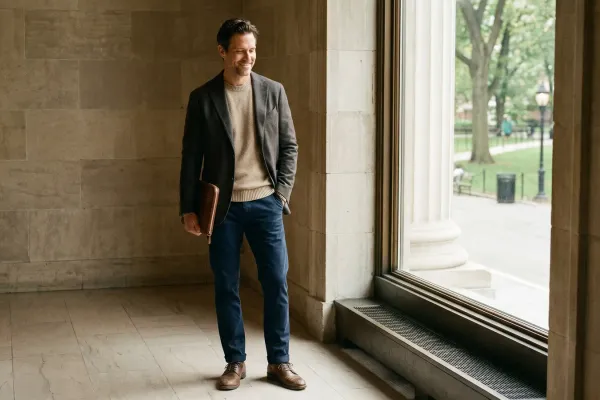
If the office is suit-and-tie, you wear a suit. If it’s business casual, you wear a blazer with a collared shirt. If it’s genuinely casual — a startup where everyone is in tees and sneakers — you still show up in a clean collared shirt and good trousers. Dressing slightly above the room reads as respect for the occasion. Nobody has ever lost an offer for looking a little too pulled together at the interview, and the fear of “overdressing” is almost always overblown.
The reason this works: your interviewer is not grading you against a runway. They are reading whether you took the meeting seriously and whether you’ll fit. Clean, deliberate, slightly-elevated clothing answers both questions before you say a word.
A default outfit that always works
When you don’t want to think, build this:
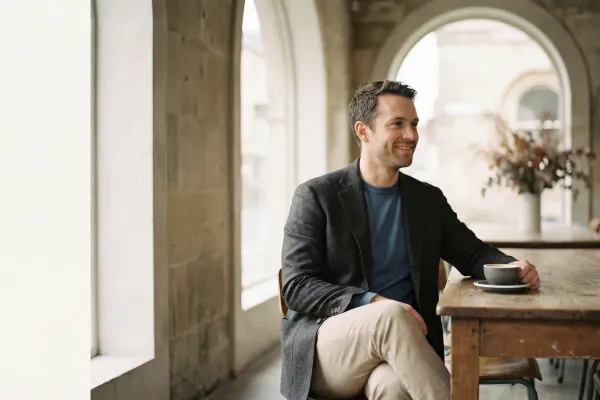
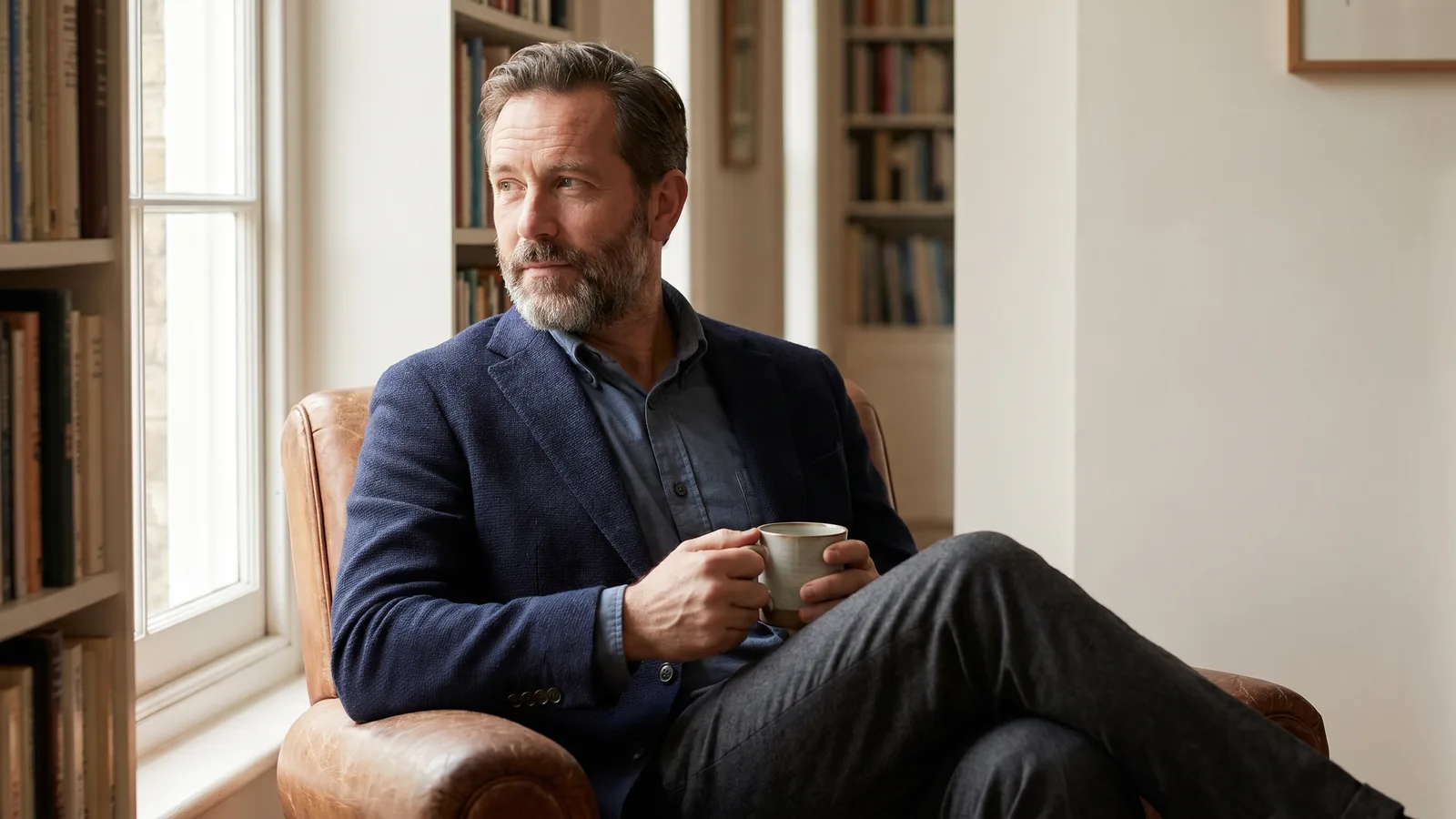
- A navy or charcoal blazer, unstructured or lightly structured, in a fit that closes cleanly without pulling.
- A solid collared shirt — white or light blue — pressed, with no visible undershirt at the neck.
- Dark chinos or wool trousers in navy, charcoal, or stone, hemmed to break just slightly on the shoe.
- Leather shoes — a clean derby, loafer, or minimalist sneaker in leather, not canvas — with a matching belt.
That combination is appropriate for the overwhelming majority of business casual interviews, across industries. It photographs well on a webcam, survives a warm room, and never reads as either sloppy or costume-like. If you want this broken down piece by piece, the sibling guide on interview attire for men builds the outfit from the ground up.
Fit beats everything
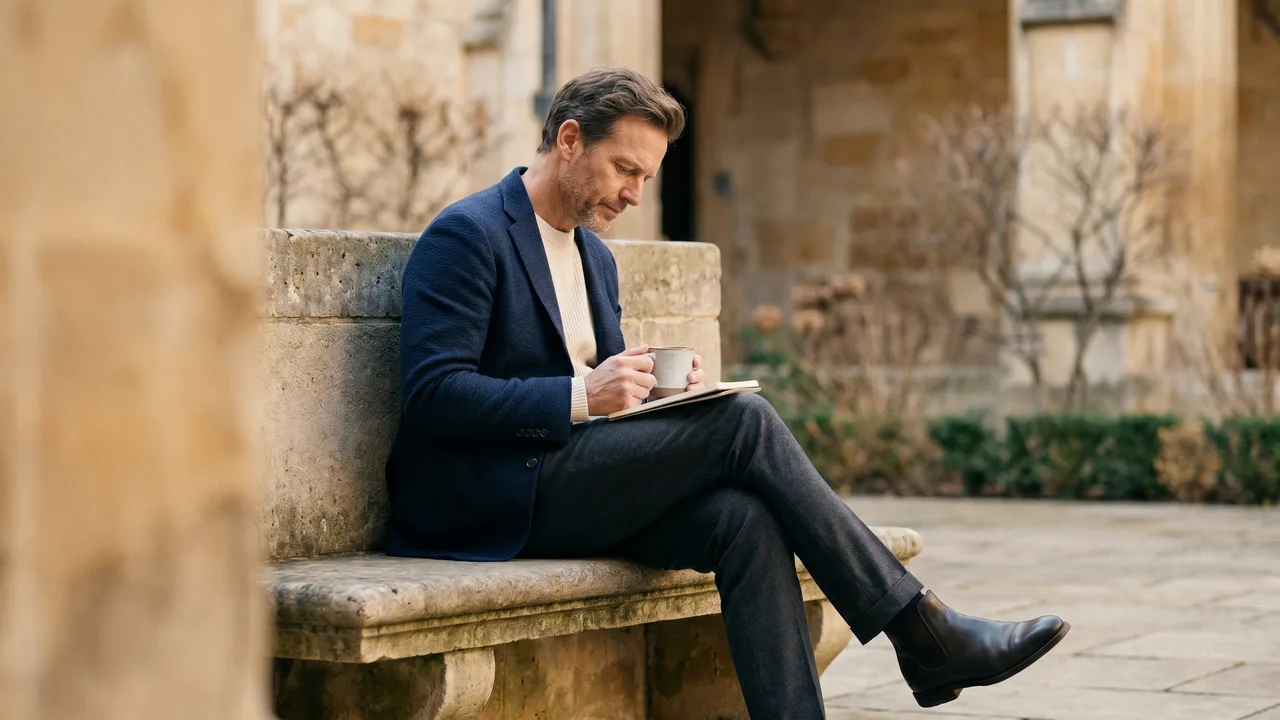
You can spend nothing and still look sharp if the clothes fit. You can spend a great deal and look careless if they don’t. Interviewers read fit instantly, even if they couldn’t name what they’re seeing.
The blazer should sit flat across your shoulders with no divots or pulling at the button. The shirt should follow your torso without ballooning at the waist. The trousers should sit at your natural waist and taper enough that there’s no extra fabric pooling at the ankle. A twenty-dollar tailoring trip — taking in a shirt, hemming a pant — does more for your appearance than another hundred dollars of new clothes.
What to avoid
A short list of things that quietly undercut an otherwise good outfit:
- Jeans, even at jeans-friendly companies. Wait until you have the job.
- Athletic sneakers, sandals, or anything canvas. Footwear is where casual creeps in fastest.
- Loud patterns or bright colors that pull focus from your face and conversation.
- Wrinkled or untucked shirts. Press the shirt the night before; a steamer takes two minutes.
- Visible logos and novelty details. Neutral and quiet always wins an interview.
- Anything ill-fitting, however expensive it was.
Edge cases worth planning for
The remote interview. A business casual Zoom interview deserves the same outfit as an in-person one — dress the whole body, not just the collar. A solid shirt or fine knit reads cleanly on camera; tight checks and herringbone can shimmer and distract. Sit where the light falls on your face, not behind you.
Hot weather. You can drop the blazer if the climate genuinely demands it, but keep the collared shirt and good trousers. A short-sleeve shirt is acceptable only if it’s a crisp, structured one — never a tee. When in doubt, bring the blazer and carry it; arriving polished and removing a layer is easier than wishing you had one.
The company you can’t read. If you genuinely can’t tell how a place dresses, default up. A blazer you can take off beats a too-casual look you can’t fix. You can also simply ask the recruiter — “what’s the dress code for the interview?” is a normal, low-risk question that signals you care about getting it right.
Grooming and the small things that frame the outfit
Clothes are most of the picture, but not all of it. The details that surround the outfit either reinforce the impression or quietly undermine it, and they cost nothing but attention.
Show up clean and trimmed: a fresh shave or a tidy beard, neat hair, clean nails. These read instantly and subconsciously. Skip strong cologne entirely — a closed interview room or a small office is no place for scent, and you never know who’s sensitive to it. Carry as little as possible. A slim portfolio or a clean leather folder holding a few copies of your resume looks far more deliberate than a bulging backpack or a phone clutched in your hand.
Mind the parts of the outfit that are easy to forget. Pull your socks up so no skin shows when you sit and cross a leg; choose a pair that doesn’t shout. Empty your trouser pockets so the line stays clean. Make sure your watch, if you wear one, is simple rather than flashy. None of these will win the interview on their own, but together they complete the sense that you thought it through — which is exactly the impression the clothes are there to create.
Plan the outfit the night before
The single most useful habit is to assemble the entire outfit the evening before, not the morning of. Lay it out, try it on, and check it in a mirror under decent light. Look for the things that hide until it’s too late: a missing button, a stubborn wrinkle the steamer needs to handle, a scuff on the shoe that wants polish, a hem that’s come loose.
This does two things. It removes all wardrobe decisions from a morning that already has enough on it, and it surfaces problems while you still have time to fix them. Walking out the door in clothes you’ve already confirmed look right lets you spend your mental energy on the conversation instead of wondering whether your collar is sitting flat. Confidence in an interview is partly a posture you adopt — and knowing you look the part is one of the easiest ways to find it.
After the offer
Once you’ve landed the role, your goal shifts from impressing to fitting in. That’s when you calibrate down to match the actual office — and the interview edition guide for men covers how to read a workplace’s real dress culture so your first week looks like you belong there. For the interview itself, though, the formula holds: clean, well-fitted, one notch above the room.