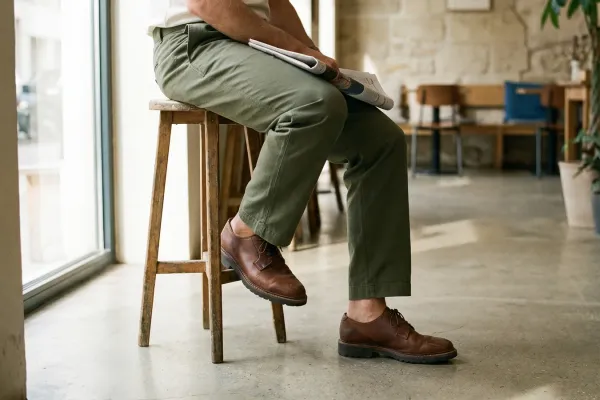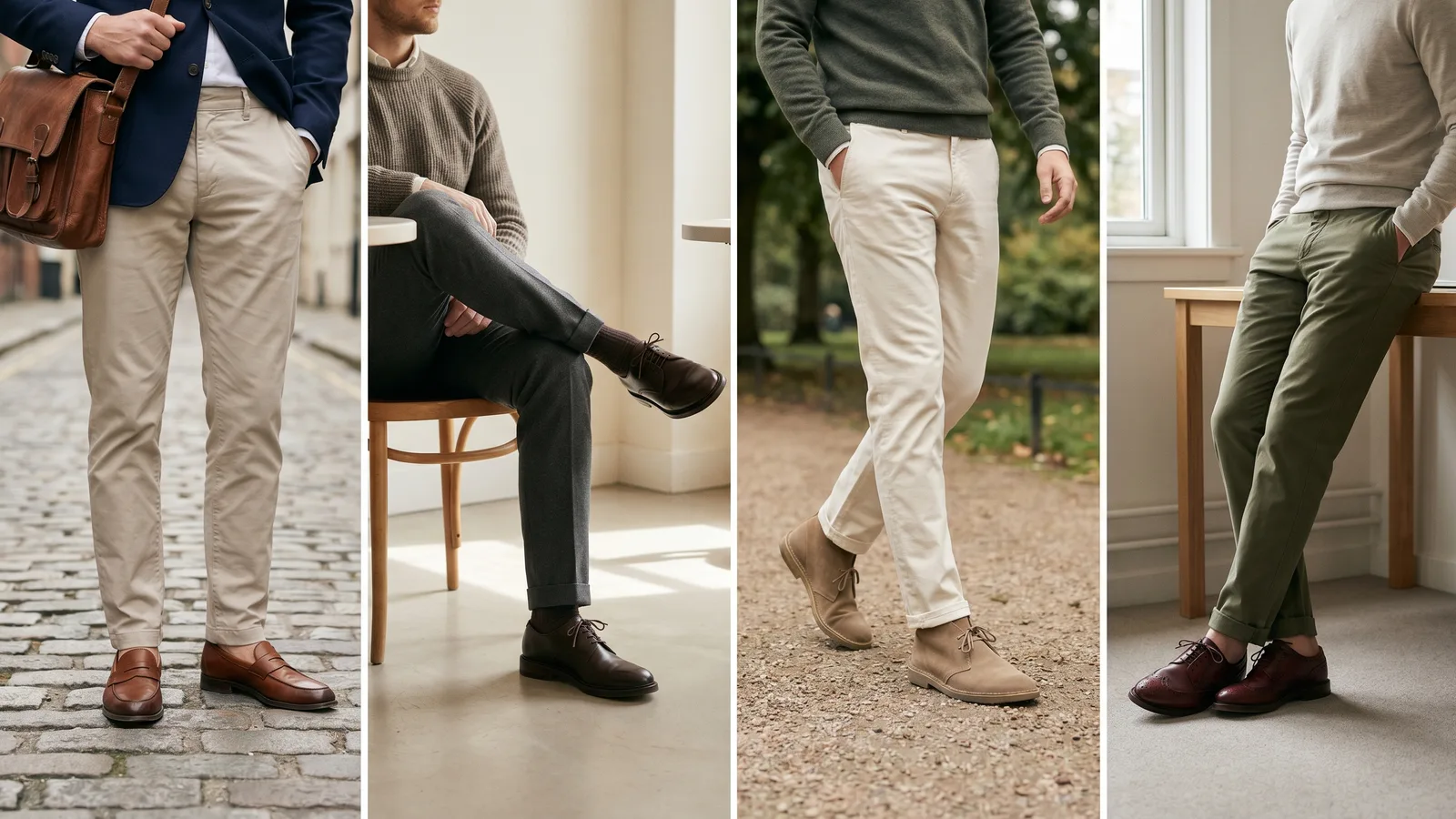
Why chinos are the default for a reason
If business casual had a uniform trouser, it would be the chino. Ask what to wear below the waist to an office that says “business casual” and the most reliable answer, in nearly every workplace, is a clean pair of chinos in a neutral color. They are dressier than jeans, less formal than a wool suit trouser, and they sit comfortably in the wide middle that the dress code actually describes.
That middle is the whole appeal. A chino looks intentional without looking stiff. It pairs with almost anything — an oxford shirt, a polo, a sweater, a blazer — and it works across more offices than any other single bottom. If you are building a business casual rotation from scratch, this is the piece to buy first, and probably to buy in more than one color.
This guide covers how to choose color, fit, and break so your chinos look deliberate rather than default. For the full range of business casual bottoms and how chinos fit alongside them, see our Bottoms & Footwear guide.
Chino versus khaki: clearing up the words
People use these two words interchangeably, and the overlap causes real confusion when shopping.
Chino refers to the trouser style and its fabric: a smooth, medium-weight cotton twill, cut as a flat-front (or, occasionally, pleated) trouser with a clean finish. Khaki is a color — the tan-to-beige shade that became so associated with these trousers that the name stuck to the garment itself.
So a pair of khaki chinos is a chino that happens to be tan. But chinos come in navy, grey, olive, stone, and more. When you read “business casual khaki pants,” picture the classic tan chino. When you read “chino,” picture the broader category of trouser available in many colors. Both belong in business casual; chino is simply the more useful word because it covers all of them.
Choosing the color
Color is where chinos either disappear into a polished outfit or call attention to themselves for the wrong reasons. For business casual, neutrals do the heavy lifting.
The core rotation, in rough order of versatility:
- Navy. The most useful chino color and the easiest to dress up. Navy reads almost as formally as grey trousers and pairs with virtually every shirt and shoe. If you buy one pair, buy this.
- Stone / khaki / tan. The classic chino. Light, easy, and broadly appropriate, though slightly more casual than navy or grey. A wardrobe staple.
- Grey. Mid-grey to charcoal brings a quietly dressed-up feel and pairs cleanly with blues, whites, and earth tones. A strong second or third pair.
- Olive. A relaxed, modern neutral that works better in casual-leaning offices than in conservative ones.
Build outward from navy and stone, add grey, and only then consider bolder shades. Bright colors, loud patterns, and seasonal novelties read more casual or more attention-seeking than business casual generally wants. The aim is a trouser that supports the outfit, not one that announces itself.
Getting the fit right
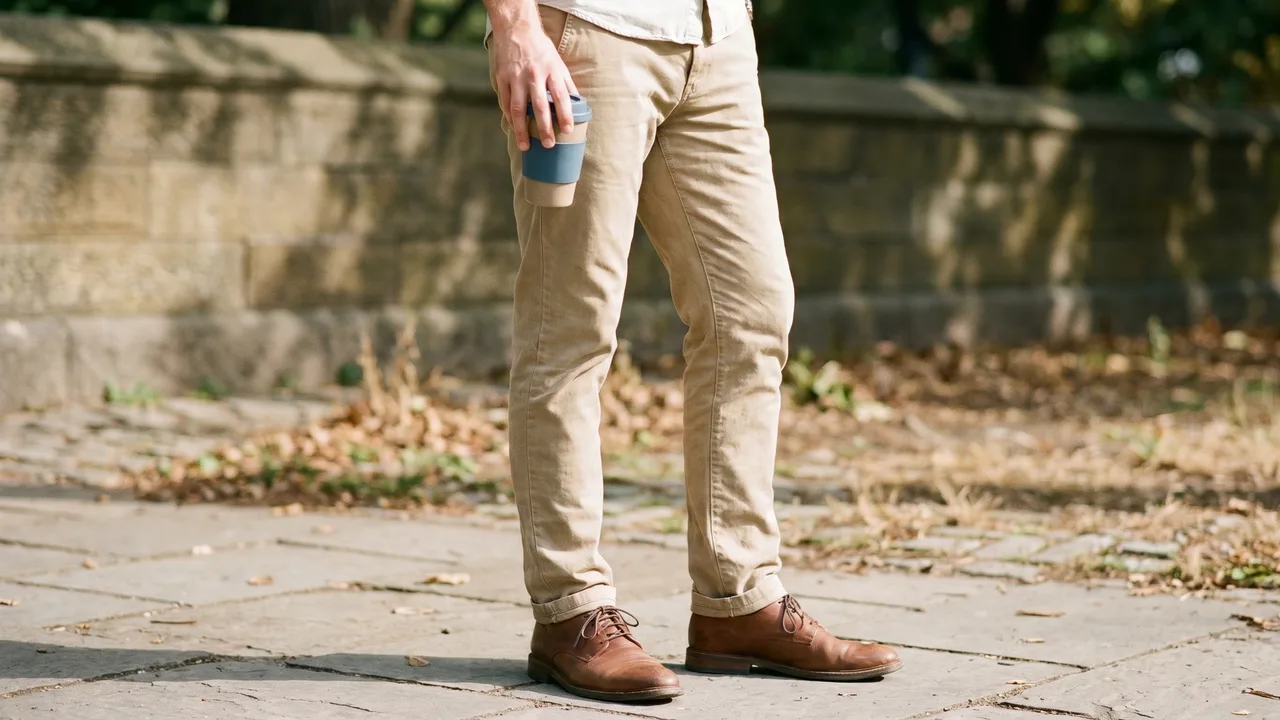
Fit is what separates a sharp chino from a sloppy one, and it matters more than color or price. A great chino in a plain color will always beat an expensive one that fits badly.
What to aim for:
- Through the seat and thigh: tailored but not tight. The fabric should follow your leg with a clean line, no pulling across the seat, no excess fabric ballooning around the thigh.
- Down the leg: a slim-to-medium straight leg with a gentle taper toward the ankle. Avoid both extremes — skinny chinos read trendy and can look strained, while baggy or relaxed cuts read weekend or workwear.
- At the waist: sitting at or just below the natural waist, secure enough to wear without cinching the belt to hold them up.
If a pair fits everywhere but the length, that is the easiest fix in menswear. A tailor can hem chinos cheaply and quickly, and it is almost always worth doing.
The break: where the trouser meets the shoe
The break is how much the trouser fabric folds where it meets your shoe, and it quietly shapes how modern and intentional the whole outfit looks.
- No break: the hem just reaches the top of the shoe with no fold. Clean and contemporary; a popular, low-risk default.
- Slight break: a single soft fold where the fabric grazes the shoe. Classic, safe, and flattering on most builds.
- Full break: the fabric stacks and folds over the shoe. This reads dated and sloppy on a chino — avoid it.
Aim for no break or a slight break. Both look deliberate. The full break, with fabric pooling at the ankle, is the most common way a decent pair of chinos ends up looking careless. This is the second thing a tailor should fix after overall length.
Building the outfit around the chino
Part of why chinos anchor business casual is how easily they combine with everything above the waist.
Reliable pairings:
- Chinos and an oxford-cloth button-down — the foundational business casual outfit, hard to get wrong.
- Chinos and a knit polo — clean and easy in warmer months or relaxed offices.
- Chinos and a fine-gauge sweater, on its own or layered over a collared shirt — dressed-up and seasonal.
- Any of the above with a blazer — the surest way to lift chinos toward the dressier end of business casual.
For footwear, leather does the most: loafers, derbies, and chukka boots all pair naturally with chinos, and clean leather sneakers work in more relaxed settings. Match shoe color to the trouser — brown shoes flatter navy, stone, and olive especially well; black leans more formal. The Bottoms & Footwear pillar covers shoe choices in depth.
A simple color logic keeps things easy: navy chinos go with almost anything; stone and khaki love navy, white, and earth-toned tops; grey pairs cleanly with blues and whites.
Chinos versus jeans
Chinos and jeans answer the same impulse — a relaxed, no-fuss trouser — but they carry different risk. Chinos sit unambiguously inside business casual in nearly every office. Jeans depend on the wash, the cut, and whether your workplace tolerates denim at all.
If you are weighing the two, chinos are the safer starting point, with jeans as the option you add once you know your environment. We cover that decision in detail in can you wear jeans for business casual and blue jeans in business casual.
The bottom line
Chinos earn their place as the backbone of business casual because they are versatile, broadly appropriate, and genuinely easy. To make them work: choose neutral colors, starting with navy and stone; get the fit tailored but not tight, with a slim-to-medium straight leg; and aim for no break or a slight break at the hem. Build the rest of the outfit up from there with collared shirts, sweaters, blazers, and leather shoes.
Get a few pairs in the right colors, fitting properly, and you have solved the bottom half of business casual for most of your week — quietly, reliably, and without thinking about it.