
You do not need a tie, but you do need a plan
For a lot of men, the question is simple and a little anxious: is business casual tie or no tie, and if I skip the tie, will I look underdressed? The short answer is that business casual does not require a tie at all. The longer answer is that taking the tie off is not the whole job. A tie hides a multitude of small issues, and once it is gone, the rest of the outfit has to be a little more deliberate.
This is the quick guide: what business casual without a tie actually looks like, the few rules that keep it from sliding into sloppy, and what to put your attention on instead of the tie. For the deeper picture across the whole topic, the no-tie pillar guide is the hub; this page is the fast version.
First, the simple answer
Business casual sits between formal (suit and tie) and casual (jeans and a t-shirt). The tie lives on the formal end. So in nearly every business-casual setting, no tie is not just acceptable, it is the norm. If your office calls itself business casual, the default assumption is an open collar, not a knotted tie.
A few quick reference points:
- Dress shirt, no tie, with chinos or trousers: core business casual.
- Polo or knit collar with trousers: business casual, leaning relaxed.
- Sport coat over an open-collar shirt: business casual, leaning sharp.
- Suit with no tie: can be business casual depending on the suit (more on that below).
If you want a tie, you can wear one, but you are dressing slightly up from the baseline, not meeting it.
The four things that replace the tie
A tie does quiet work: it fills the open collar, adds a vertical line, and signals effort. Remove it and you redistribute that work across four things.
1. The collar. This is the big one. Without a tie, your collar sits right under your face with nothing to distract from it. A collar that splays open or curls at the points reads as careless. Choose a shirt with a structured collar that holds its own shape, and keep the collar stays in so the points stay flat. Our collared shirt guide covers collar types, and where to put collar stays covers the stays themselves. If the collar still gapes, the fix is structure, not a tie accessory; see open-collar hardware.
2. The fit. A tie draws the eye to the center and forgives a slightly loose shirt. Without one, fit shows more. The shirt should sit close through the body without pulling, and the shoulder seams should land where your shoulders end.
3. The shoes. Shoes carry a surprising amount of an outfit’s polish, and that load goes up when the tie comes off. Clean, well-kept leather shoes signal that the whole look was intentional. Worn or scuffed shoes drag it down.
4. The press. A pressed shirt, especially a pressed collar, does much of what a tie used to do for “looks put together.” Wrinkles are far more visible without a tie to break up the front of the shirt.
Get those four right and the missing tie never registers as missing.
How far to open the collar
The reliable default is one button undone. It opens the neckline just enough to look relaxed and intentional without showing chest. Two can work in a casual setting with a structured collar, but it edges toward undone, and more than that belongs off the clock. For the full breakdown by situation, see how many buttons to undo.
What to wear instead of a tie (if you want something there)
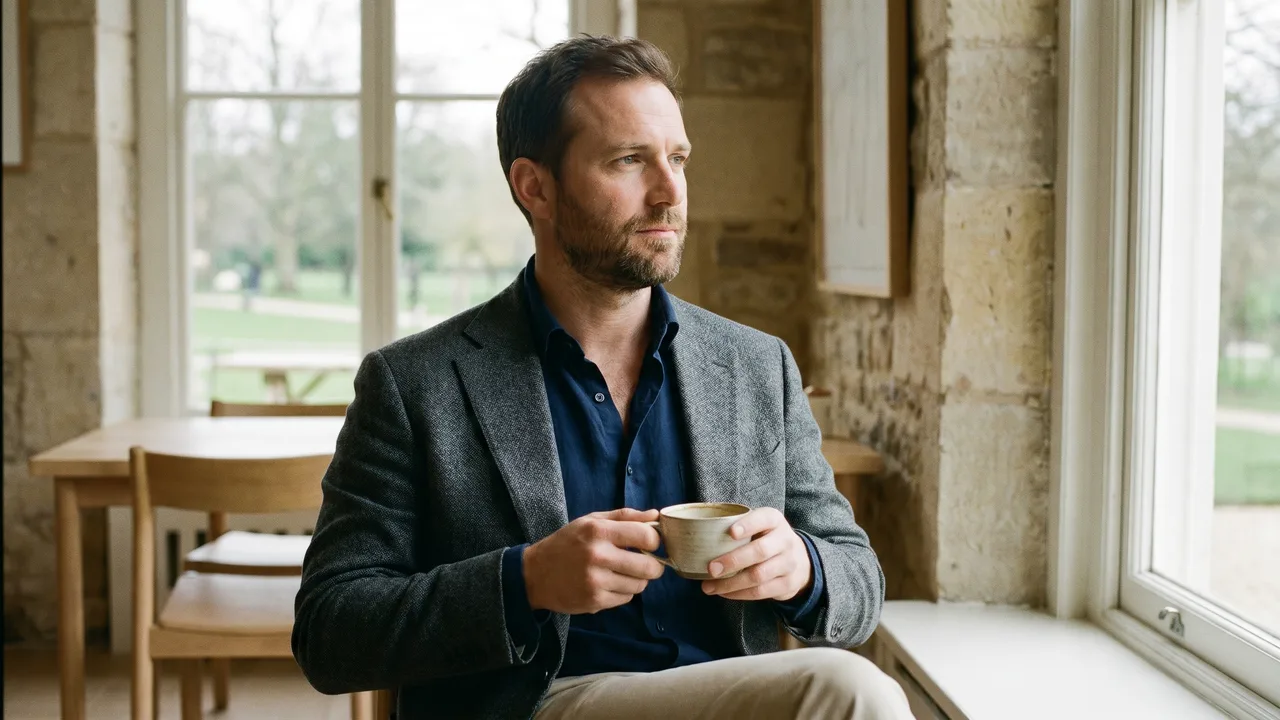
Some men feel the open neckline is too bare and want a piece to fill it. You have options that stay tasteful:
- A pocket square. Adds finish to the chest without touching the neck. The easiest upgrade.
- A sport coat or blazer. Frames the open collar with lapels and instantly raises the formality.
- A fine-gauge knit or merino layer. A crew or quarter-zip over a collared shirt fills the neckline and reads polished in cooler settings.
What you do not need is a tie substitute clipped to the shirt. The open collar is a complete look on its own when the collar is doing its job.
The suit-without-a-tie case
A suit with no tie can absolutely be business casual, but only certain suits pull it off. Softer, more textured suits in casual colors read as elevated business casual when worn open-collar. Sharp, formal dark suits look like a formal outfit missing a piece. Because that case has its own rules, we cover it in full in wearing a suit without a tie.
Common mistakes that make no-tie look sloppy
The open collar fails in predictable ways, and almost all of them are avoidable once you know to watch for them.
- Leaving the top button done up. With no tie, a fastened top button looks stiff and tight. Undo it; that is simply how an open collar is meant to sit.
- A collar with no support. A soft, unstructured collar splays and curls the moment the tie comes off. This is the single most common reason no-tie reads as careless.
- A crew-neck undershirt peeking out. It shows in the open V and ruins the clean neckline. If you wear an undershirt, choose a low scoop or V-neck that stays hidden.
- A wrinkled shirt. Without a tie breaking up the front, wrinkles are far more visible. A pressed shirt, especially the collar, is non-negotiable.
- Tired shoes. Shoes carry more of the outfit’s polish once the tie is gone. Scuffed or worn shoes pull the whole look down.
None of these are about taste or money. They are about attention, and attention is exactly what makes an open collar look deliberate instead of accidental.
Building a small no-tie wardrobe
If you are committing to dressing without a tie most days, a handful of pieces cover almost everything. You do not need a large wardrobe; you need a reliable one.
Start with two or three crisp dress shirts in white and light blue, each with a structured collar that holds its shape. Add a sport coat or blazer in a versatile color like navy or gray, which frames the open collar and raises the formality on any day you need it. A couple of pairs of well-fitted trousers or chinos in neutral tones round out the bottom half. Finish with one or two pairs of clean leather shoes kept in good condition.
That is genuinely enough to dress for a business-casual office five days a week without a tie and without repeating yourself in a way anyone notices. Everything mixes, and every piece earns its place. For more on building the broader business-casual base, the no-tie pillar guide links out to the rest of the category.
A quick checklist before you walk out
- Collar structured and stays in place.
- One button undone, collar sitting clean.
- Shirt pressed, especially the collar.
- Fit close through the body, shoulders landing right.
- Shoes clean and in good shape.
Run that list and you are dressed for any business-casual room without a tie in sight.
The short version
Business casual does not require a tie; in most offices, no tie is the default. The work the tie used to do moves to four places: a structured collar with stays in, a clean fit, good shoes, and a pressed shirt. Open one button, add a pocket square or a sport coat if you want something at the neckline, and skip any tie substitute clipped to the shirt. For the complete picture, start at the no-tie pillar guide.