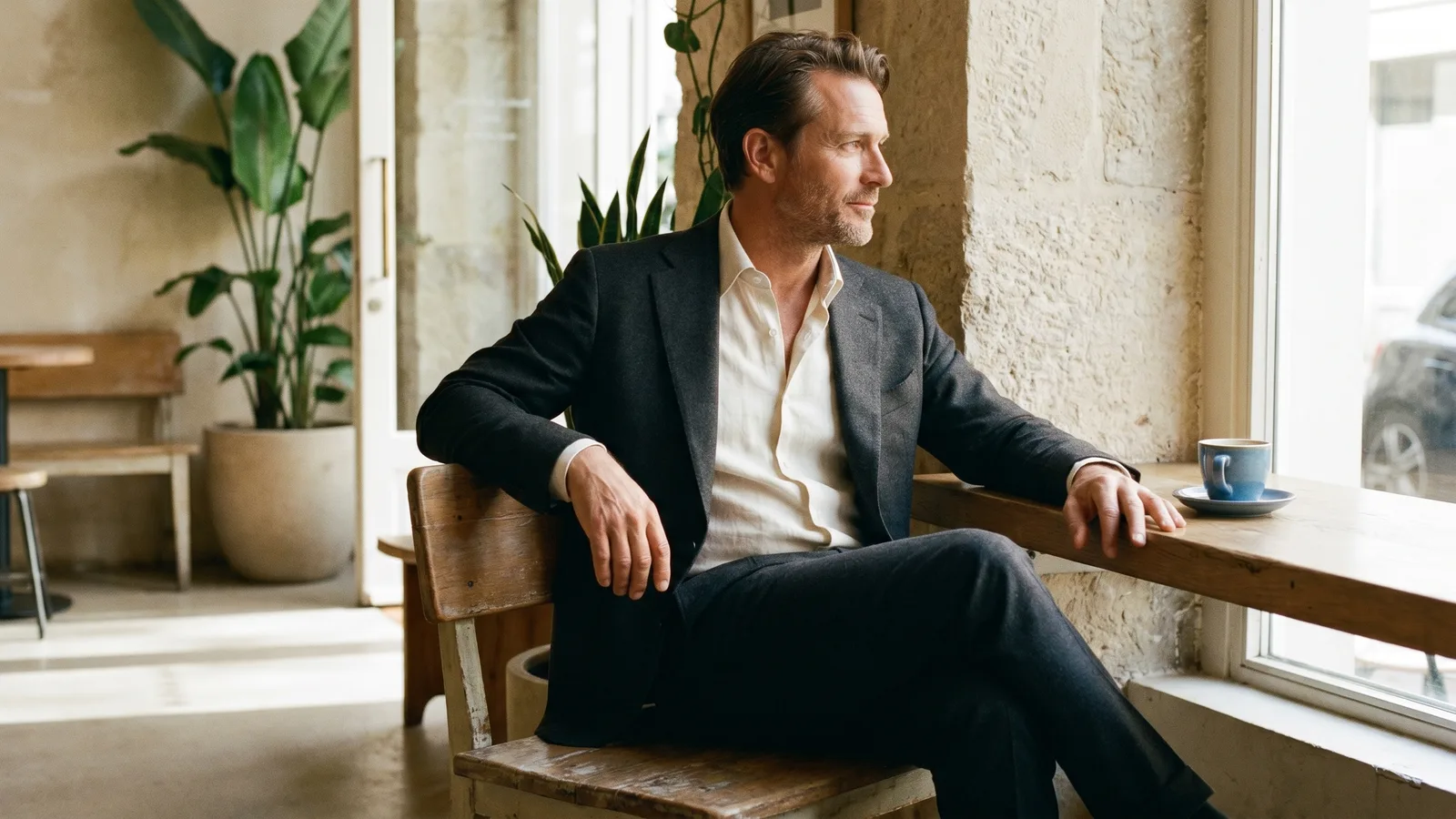
The suit looks sharp, but something feels off
You put on a good suit, skip the tie because the room called for it, look in the mirror, and the outfit reads as a formal suit that forgot its tie rather than a deliberate, modern look. The jacket is right. The trousers are right. But the neckline looks bare, and the whole thing feels slightly incomplete.
That gap is real, and it is fixable. The open-collar suit is one of the most worn looks in business today, but it does not work with every suit, and it does not work by accident. The difference between looking current and looking like you lost your tie comes down to which suit you chose and how you handle the parts a tie used to cover.
If you are weighing the no-tie call more broadly, the no-tie pillar guide covers when to drop the tie at all. This piece is about the suit specifically.
Why some suits work tieless and others do not
A tie does quiet work in a formal outfit. It fills the open V of the jacket, draws the eye to a vertical center line, and signals “dressed up.” Remove it and the suit has to carry that weight on its own. Whether it can depends almost entirely on the suit’s formality.
Suits that work without a tie tend to be softer and less formal to begin with:
- Textured or matte fabrics: hopsack, fresco, flannel, cotton, linen blends.
- Casual or mid-tone colors: mid-gray, tan, olive, lighter blues.
- Softer construction: less padded shoulders, a more relaxed lapel, patch pockets.
Suits that fight the no-tie look are the formal ones:
- Sleek worsted in very dark navy or charcoal.
- Sharp, structured tailoring built for boardrooms and ceremonies.
- Anything you would wear to a wedding or a funeral.
A formal suit is engineered around the assumption of a tie. Strip it away and the formality has nowhere to land, so it looks like an omission. A more casual suit never assumed a tie in the first place, so going open-collar looks like the plan all along.
If your only suit is a sharp dark one, you can still pull it off occasionally, but lean on everything in the sections below to compensate.
The shirt and collar do the heavy lifting
With the tie gone, the shirt collar becomes the most important thing in the outfit. It sits right under your face, framed by the lapels, with nothing to distract from it. A collar that splays open or curls at the points will sink the whole look.
A few priorities:
Choose a collar with structure. A spread or semi-spread collar with some body stands up and frames the neckline. A flimsy, soft collar collapses into the jacket and looks limp. Our collared shirt guide goes deeper on collar types and construction.
Keep the collar stays in. This is non-negotiable for the open-collar suit. Stays keep the points flat and sharp instead of curling outward. If yours are missing, see where to put collar stays. There is no tie knot propping the collar up, so the stays are the only thing holding the line.
On color, white and light blue are the workhorses. A crisp white shirt is the cleanest, most reliable choice under a no-tie suit; it reads sharp and intentional. Light blue softens things slightly and photographs well. Both let the collar and the suit do the talking without competing.
If you find the open collar still gapes too much, a hidden support is the real fix, not a tie holder; our piece on open-collar hardware explains what actually keeps the neckline in place.
How far to open the collar

One button undone is the dependable default. It opens the neckline just enough to signal “relaxed and on purpose” without showing chest. Two can work with a casual suit and a structured collar in a looser setting, but it edges toward undone. Anything more belongs at a party, not at work.
The test is simple: the open V should frame your face and look composed, not expose you. For the full breakdown by setting, see how many buttons to undo.
Compensate for the missing formality
Because the tie used to carry some of the suit’s polish, you want to put that polish back elsewhere. This is what keeps the look intentional instead of stripped down.
- Add a pocket square. A simple white or muted square restores a bit of finish to the chest and signals deliberate dressing. Keep it understated.
- Mind the shoes. A clean leather shoe, well kept, anchors the formality the tie used to provide. Scuffed shoes pull the whole outfit down faster without a tie to balance them.
- Get the fit right. Tie or no tie, a suit lives or dies on fit, but the open collar leaves nowhere to hide a baggy or boxy jacket. The shoulders and the jacket length matter most.
- Consider a watch or a quiet accessory. Small, tasteful details fill the role the tie used to play in saying “this was a choice.”
The principle is that the no-tie suit should feel like you removed one element and adjusted, not like you simply left something out.
The orphaned-suit trap
There is a specific failure worth naming, because it catches a lot of men. You own one good suit, bought formal and dark for weddings and interviews, and you try to make it your everyday open-collar suit. It fights you every time, and you cannot work out why the look never quite lands.
The reason is that a formal suit is built to be formal. The sleek fabric, the dark color, the structured tailoring all assume a tie completes them. Wear it open-collar and the formality has nowhere to go, so it reads as an outfit that lost a piece. You are not doing anything wrong in how you wear it; the suit was simply never designed for this.
If the open-collar suit is going to be a regular look for you, the fix is not technique. It is a second suit, chosen casual from the start: a textured fabric like hopsack or fresco, a mid-tone color, softer construction. That suit will wear open-collar effortlessly, and you can keep the dark formal one for the occasions that actually call for a tie. Trying to make one formal suit do both jobs is the most common reason the no-tie suit disappoints.
Patterns and texture do quiet work
Once you accept that texture and color carry the no-tie suit, a few details start to matter more than they would in a tied outfit.
A suit with visible texture reads as intentionally relaxed, which is exactly the register the open collar wants. Smooth, sheeny worsted reads formal and bare without a tie; a matte, slightly rough cloth reads softer and more deliberate. The same is true of subtle pattern. A faint check or a heathered cloth gives the eye something to rest on in place of the tie, filling the role the tie used to play in adding interest to the chest.
This is why the casual suits recommended earlier work so well open-collar and the formal ones struggle. It is not only about formality; it is about whether the fabric itself reads relaxed. When in doubt, more texture helps the no-tie look and a flat, formal finish hurts it.
When to keep the tie on instead
The open-collar suit is not always the right call. If the event is genuinely formal, the dress code is explicit, or you are the most junior person walking into a conservative room, the tie still does useful work. Reading the room beats following a trend. The no-tie pillar guide walks through where the open collar fits and where it does not.
The short version
A suit without a tie works when the suit was never very formal to begin with: softer fabric, casual color, relaxed cut. Under it, a crisp white or light-blue shirt with a structured collar and the stays kept in carries the neckline that the tie used to. Open one button, add a small amount of polish back through a pocket square and clean shoes, and the look reads as modern and deliberate rather than incomplete. For the quick rundown across the whole category, see business casual without a tie.