
One button feels safe, two feels risky, and you are not sure why
Here is the small daily dilemma. You take off the tie, or never put one on, and now you have to decide how far to open the collar. One button feels fine but maybe a little buttoned-up. Two feels relaxed but maybe like you are trying too hard. Leave it wrong and the shirt reads as either stiff or careless. There is not much margin.
The good news is that the rule is simpler than it feels, and most of the anxiety comes from overthinking a decision that has a clear default. This guide is entirely about the buttons: how many to undo, when, and the few details that make an open collar look deliberate instead of sloppy. For the wider topic of dressing without a tie, the no-tie pillar guide is the hub.
Start with the top button
When you are not wearing a tie, undo the top button. Always.
The top button exists for one reason: to anchor a tie knot snugly at the throat. Without a tie, leaving it fastened pulls the collar tight against your neck, looks stiff, and is genuinely uncomfortable for most men. An open top button is the expected, normal move for a tieless shirt. It is not a casual liberty; it is simply how an open collar is meant to sit.
So the real question is never whether to undo the top button. It is whether to undo a second one.
The one-button vs two-button decision
Think of it as a sliding scale of formality.
One button undone is the universal default. It opens the neckline just enough to read as relaxed and intentional while keeping the collar high and tidy under your face. It works in every business-casual setting, from a conservative office to a client lunch. If you are unsure, this is the answer.
Two buttons undone moves you toward casual. It opens the V wider, shows a bit of chest, and reads as more laid-back. It can look good in a genuinely relaxed environment, on a warm day, or with a more open collar style, but it depends on a few things going right: a structured collar that still frames the face, no distracting chest hair on display, and a setting that supports it. In a professional or client-facing context, it is usually a half-step too far.
Three or more, or fully open over bare skin, has no place in business casual. That is clubwear or beachwear. It reads as undone no matter how good the shirt is.
A useful instinct: when in doubt, button up one. The cost of looking slightly too tidy is far lower than the cost of looking too undone at work.
How the setting changes the call
The same shirt opens differently depending on where you are wearing it.
- Conservative or client-facing office: one button. Keep the neckline closed and clean.
- Relaxed creative or tech office: one is still safe; two is fine on a warm day with a good collar.
- After-hours work event or drinks: two reads as appropriately loosened up, in step with the occasion.
- Under a suit jacket or sport coat: one button. The lapels frame a higher, tidier neckline, and a wide-open collar fights the structure of the jacket. For the suit case specifically, see wearing a suit without a tie.
Read the room and the dress code, and let those move you along the scale rather than picking a number for life.
Why the collar matters more than the button count
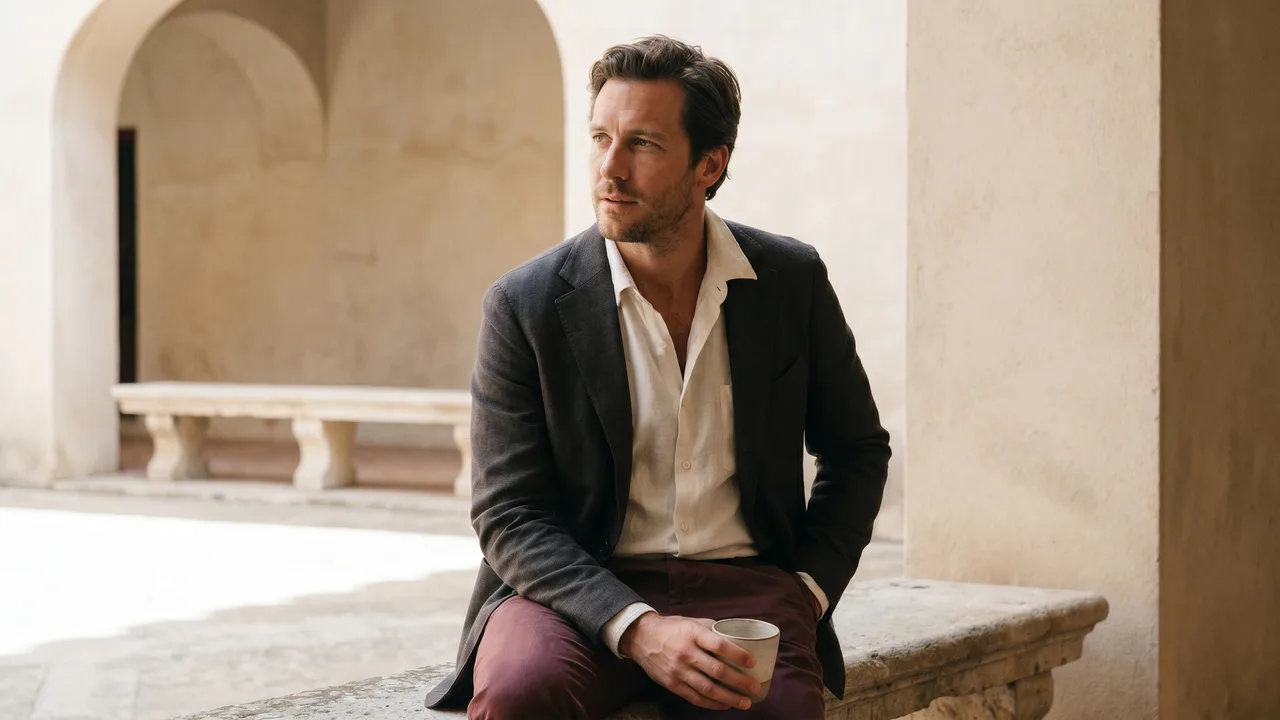
Here is the part most advice skips. How many buttons you undo matters less than whether the collar holds its shape once it is open.
With the top button undone and no tie knot to prop it up, the collar is on its own. A collar with structure stands up and frames the open neckline. A flimsy, soft collar splays sideways, curls at the points, and makes even one undone button look sloppy. This is the actual difference between “relaxed” and “careless,” and it has almost nothing to do with the button you chose.
Two things keep the collar right:
- Keep the collar stays in. They keep the points flat and sharp instead of curling. If yours are missing, see where to put collar stays.
- Choose a collar with body. A spread or semi-spread collar with some structure holds an open neckline far better than a thin, unsupported one. Our collared shirt guide breaks down the options.
If the collar still gapes or splays no matter how you button it, the fix is structure inside the collar, not a tie substitute; our piece on open-collar hardware covers what actually holds it.
The undershirt question
An open collar exposes a slice of chest, and that is where a thin undershirt earns its place. It keeps sweat off the dress shirt and stops chest hair from showing in the open V, both of which keep the look clean. The one rule: the undershirt must not be visible above the open collar. Choose a low scoop or V-neck in a thin fabric so it stays hidden, and skip a crew-neck undershirt, which will peek out and ruin the line.
What about wearing a shirt fully open?
A common question, often from men just getting comfortable with the open collar, is whether you can wear a dress shirt fully unbuttoned. The honest answer depends entirely on context, and none of those contexts are the office.
Fully open over bare skin is a going-out or beach look, not a business one. In any work or business-casual setting it reads as clubwear and undercuts everything else you are wearing. The chest is exposed, the shirt loses all its structure, and the effort you put into fit and grooming stops registering.
There is one legitimate version of the fully open shirt, but it lives outside business casual: a button-up worn completely open as a light layer over a clean, well-fitting t-shirt, in a casual weekend setting. That works as a relaxed layering piece. It is not a substitute for an open-collar dress shirt at work, and it does not belong in a professional wardrobe conversation. For work, the range is one or, at most, two buttons. Everything past that is a different occasion entirely.
Easing into it if the open collar feels new
If you have spent years either fully buttoned or in t-shirts, the open collar can feel exposing at first, and that hesitation is normal. The way through it is to start conservative and let your eye adjust.
Begin with just the top button undone and a structured collar that frames your face cleanly. Wear it for a few days until it stops feeling like a statement and starts feeling like nothing at all, which it will quickly. Once the single open button feels neutral, you can decide case by case whether a relaxed setting warrants the second. Most men find that one undone button becomes their permanent default and the question simply stops coming up. The discomfort is almost always about novelty, not about the look itself, and it fades fast once the collar is sitting right.
Common mistakes to avoid
- Leaving the top button done with no tie. Looks stiff and tight; undo it.
- Opening to the sternum at work. Reads as clubwear; stay at one or two.
- A crew-neck undershirt showing in the V. Defeats the clean neckline.
- Ignoring a splaying collar. The button count cannot save a collar with no structure.
The short version
Without a tie, undo the top button every time; that is just how an open collar sits. One button undone is the safe default for any business-casual setting, and a second works only in relaxed contexts with a structured collar. Mind the collar more than the count: keep the stays in and choose a collar with body, because a splaying collar looks careless no matter how you button it. Add a thin, low-neck undershirt to keep the open V clean. For the broader picture, start at the no-tie pillar guide.