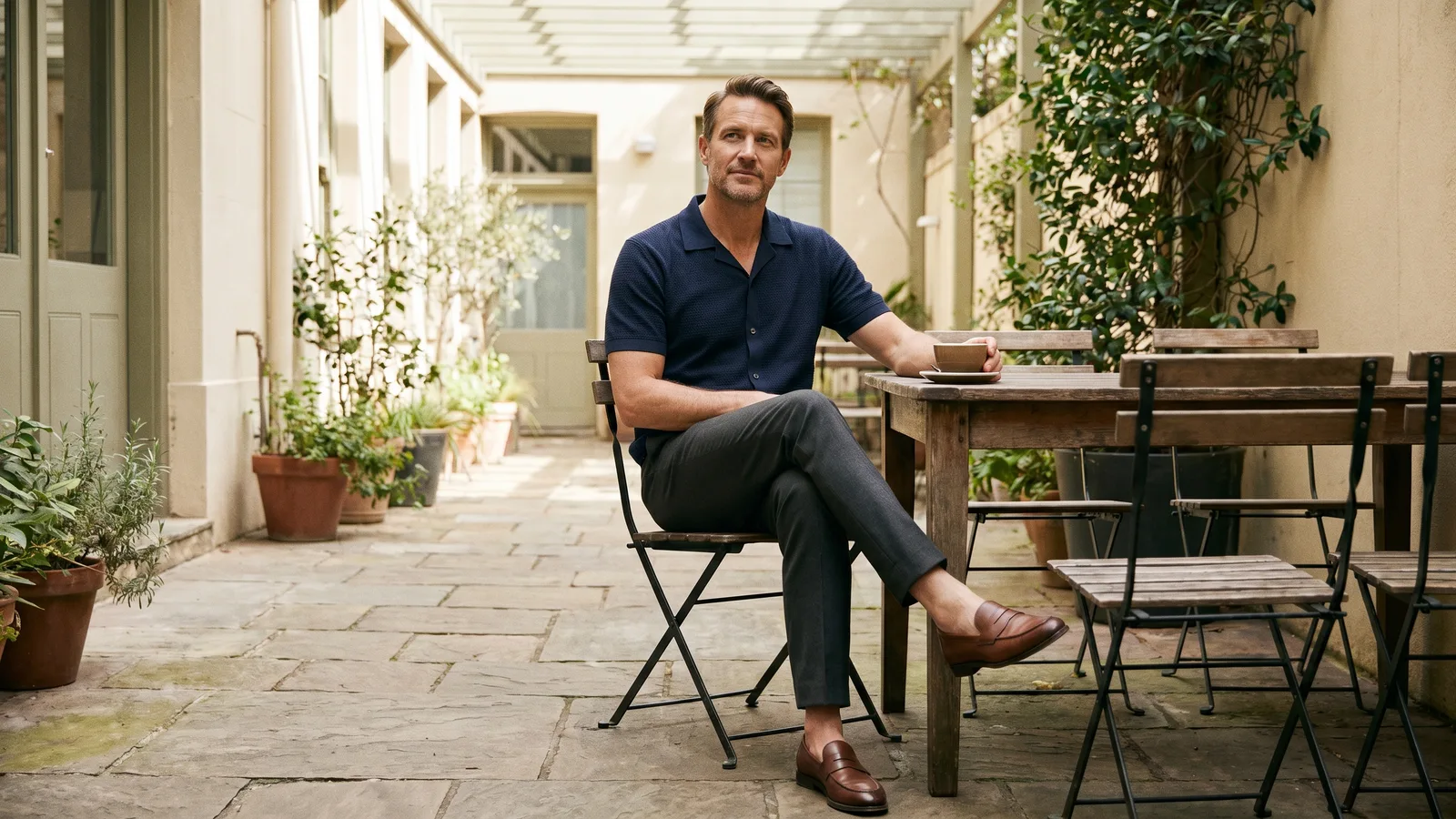
Can a short-sleeve collared shirt actually be business casual?
The honest answer: sometimes, and it depends entirely on the shirt and the room. A short-sleeve collared shirt carries a reputation problem — it can read as too casual, or worse, like office-supply-room standard issue. But a well-chosen one, in the right setting, is a genuinely sharp warm-weather option. The difference is in fit, fabric, and collar — the details, not the sleeve length itself.
Plenty of men wrestle with this. The recurring question online is some version of “what to do with the collar, and what shirts work best?” when the rules relax. Short sleeves sit right at that ambiguous line. This guide sorts out when they work, what to look for, and how to keep the collar — the part that makes or breaks the look — sharp.
For the full picture of how a collar reads in relaxed dress, the business casual collared shirt pillar is the place to start.
When it works — and when it doesn’t
Business casual isn’t one dress code; it’s a spectrum that depends on your office, your climate, and the day.
A short-sleeve collared shirt works when:
- Your office leans genuinely casual or creative.
- It’s hot, and a long sleeve would mean visible sweat or constant rolling.
- The shirt fits well and the fabric has some quality and texture to it.
- You’re pairing it with chinos or smart trousers, not shorts.
It doesn’t work when:
- Your office is traditional or client-facing in a conservative industry.
- The shirt is boxy, thin, or visibly cheap.
- You’d be the only one not in a long sleeve in a meeting that matters.
When in doubt in a more formal room, a long-sleeve shirt with the sleeves rolled neatly to the forearm is the dependable business casual move. It reads more deliberate and gives you a quick way to dial formality up or down.
Fit and fabric do the heavy lifting
A short-sleeve shirt lives or dies on fit. The classic failure is the boxy, billowing cut with sleeves that flap past the elbow — that’s what reads as sloppy, not the short sleeve.
Look for:
- A trim, clean cut through the body, skimming you rather than tenting.
- Sleeves that end mid-bicep, hugging the arm without squeezing. Sleeves that hang to the elbow drag the whole look down.
- A shirt hem that suits how you’ll wear it — a straight hem at roughly mid-fly is built to be worn untucked; a longer curved tail wants tucking.
Fabric matters as much as fit. The shirts that look intentional in a casual office are made of materials with character: linen and linen blends, slubby or textured cotton, lightweight knits and piqué. Smooth, thin, shiny synthetics are what cheapen the look. Texture reads as a choice; flatness reads as a uniform.
The collar question
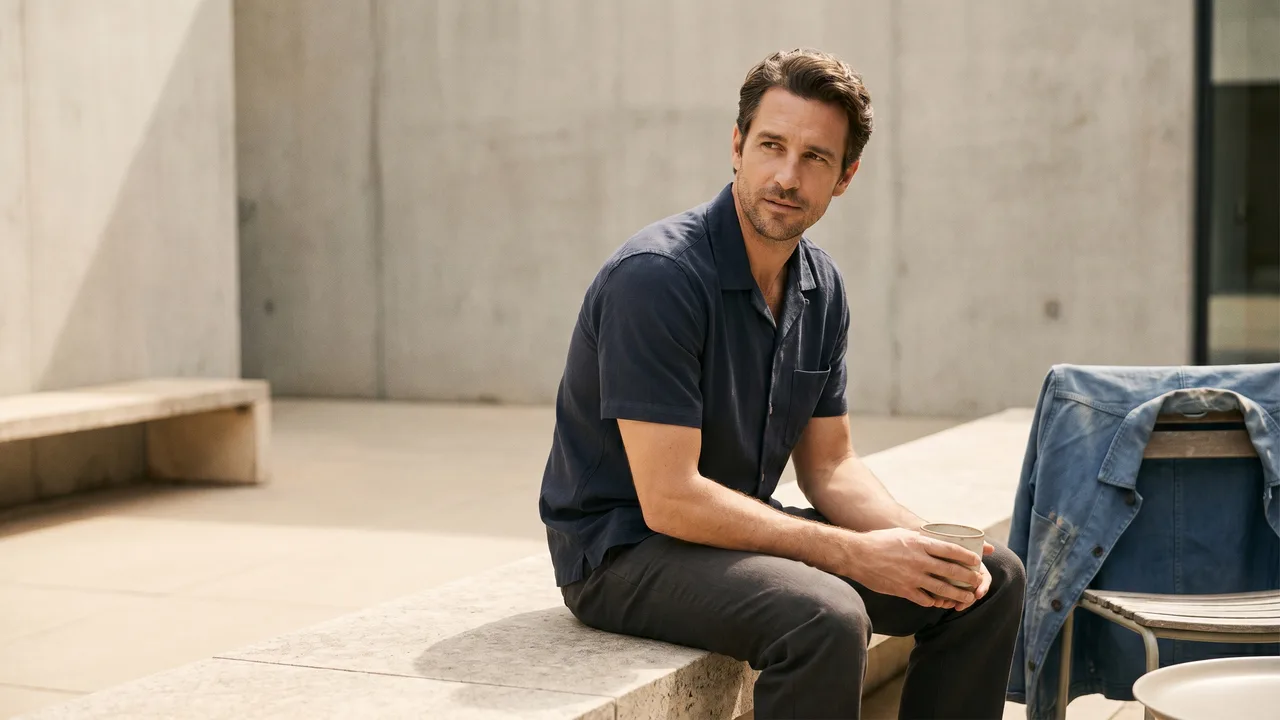
The collar is the detail that decides whether a short-sleeve shirt looks pulled together — and it’s where short-sleeve shirts most often fall short, because many casual ones have soft, unstructured collars that curl and won’t sit clean.
You have two good paths:
A structured point or spread collar. If the shirt has a proper collar with stay pockets, treat it like any dress shirt: slot in collar stays to keep the points flat. If you’re new to those, our guide on where collar stays go covers it. Many casual short-sleeve shirts skip the stay pockets entirely, so check before you assume.
A camp (or Cuban) collar. This is a collar designed to be worn open and flat, with a small notch and no top button. It’s the more relaxed, summer-leaning option, and because it’s built to lie open, it sidesteps the curling problem altogether. A camp-collar shirt in linen is one of the easiest ways to look intentional in heat — but it leans more smart-casual than business, so read your office.
Either way, iron the collar flat after washing. A clean, crisp collar is most of what separates a sharp short-sleeve shirt from a tired one.
What to wear it with
A short-sleeve collared shirt is only as good as the rest of the outfit. Because the shirt itself is the casual element, lean on everything else to add structure:
- Trousers over shorts. Chinos, lightweight wool, or clean cotton trousers keep the look on the business-casual side. Shorts pull it firmly into weekend territory, no matter how nice the shirt.
- Real shoes. Loafers, leather sneakers, or clean derbies. The shoes do a lot of quiet signaling about whether you’ve dressed with intent.
- A belt or finished waist. A simple leather belt that ties to your shoes reads put-together. Skip it only if the trousers are designed for it.
- A layer when the room runs formal. An unstructured blazer over a short-sleeve shirt is a known move in creative offices, though it’s a deliberate, fashion-forward one — wear it only if it fits the room.
The throughline: dress the bottom half a notch up from the shirt, and the short sleeve reads as a warm-weather choice rather than a shortcut.
Common mistakes to avoid
These are the things that pull a short-sleeve collared shirt down:
- Buttoning it to the throat with no tie. Without a tie, the top button done up looks stiff and slightly off. Leave one or two open and let the collar breathe.
- A crew-neck undershirt peeking out. A visible white crew under an open collar is a frequent misstep. Go deep-V or skip the undershirt.
- A boxy, oversized cut. The biggest offender. A short sleeve that billows reads as sloppy regardless of fabric.
- Thin, shiny fabric. It’s what makes the shirt look cheap. Reach for texture and some weight.
- A curling, neglected collar. The detail people notice. A flat, pressed collar — with stays if the shirt has pockets — is the whole game.
How to wear it
A few quick rules keep the look on the right side of casual:
- Untuck the straight-hem styles; tuck the long-tail ones. Match the move to the hem rather than forcing it.
- Keep the collar open and clean — one or two buttons undone, points lying flat. Don’t button it to the throat without a tie; that reads stiff and slightly off, which is its own common complaint among men dressing tieless.
- Pair up, not down. Chinos, clean trousers, leather sneakers or loafers. The shirt is the casual element; let the rest of the outfit add structure.
- Mind what’s underneath. If you wear an undershirt, a deep V or crew that doesn’t peek above an open collar. A visible crew-neck under an open collar is a common look that doesn’t quite land.
The bottom line
A short-sleeve collared shirt can absolutely be business casual — in a relaxed office, in warm weather, when the fit is trim, the fabric has texture, and the collar sits clean. In a more traditional room, reach for a long sleeve with the cuffs rolled instead.
Get the collar right above all. A curling, soft collar undoes an otherwise good shirt, while a flat point collar with stays — or a purpose-built camp collar — keeps the whole thing looking like a decision rather than a default. The business casual collared shirt guide goes deeper on collars across the board.