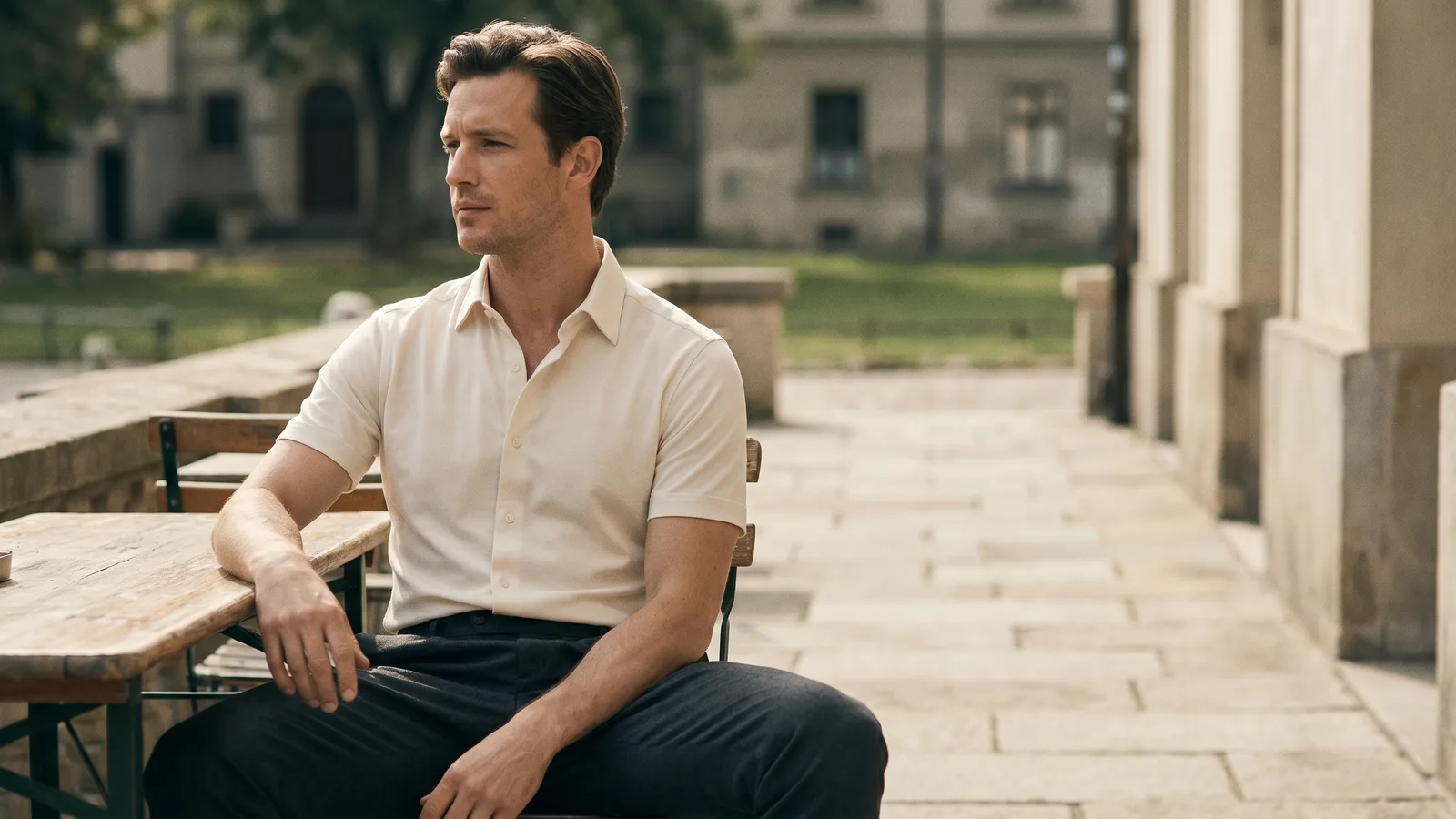
What a short-sleeve button-down collar dress shirt actually is
A short-sleeve button-down collar dress shirt combines three things worth understanding separately: the short sleeve, the button-down collar, and the dress-shirt construction. Put together, it’s a warm-weather shirt that aims to look more finished than a casual top but more relaxed than a long-sleeve, tie-ready dress shirt. Whether it lands depends on the details — and the collar is the most misunderstood of them.
People reasonably ask basic questions here, right down to “what is the most normal-looking business shirt collar?” The button-down is one of the answers, and it behaves differently from the point and spread collars most men picture when they hear “dress shirt.” This guide explains the collar, the fit, and how to wear the shirt so it reads sharp rather than dated.
For the wider context on collars and how they read without a tie, see the business casual collared shirt pillar.
The button-down collar, explained
A button-down collar has a small button at the tip of each collar point that fastens to the body of the shirt. That detail is the whole story:
- It originated in sport, not formalwear, which is why it reads slightly more casual than a plain point or spread collar.
- The buttons hold the points down on their own. That’s the job collar stays do on other shirts — so button-down collars almost never have stay pockets, and don’t need collar stays at all.
- It stays neat without a tie. Because the collar fastens itself flat, it holds its shape open. That makes it one of the better collars for the tieless look most business casual now calls for.
This is the key practical difference. If you’ve ever fought a plain point collar that flares open when you skip the tie, the button-down sidesteps that problem by design. A point or spread collar relies on stays — see where collar stays go — while the button-down builds the fix into the collar itself.
Fit is what separates sharp from sloppy
Short-sleeve dress shirts have a reputation problem, and it comes down to fit almost every time. The bad version is boxy through the body with sleeves that billow past the elbow. The good version is trim and clean.
Aim for:
- A tailored body that follows your shape without pulling at the buttons or tenting at the waist.
- Sleeves that end around mid-bicep and sit close to the arm. A short sleeve that flaps loose to the elbow is the single biggest thing dragging the style down.
- A collar that sits flush against the neck when buttoned and lies flat when open. With a button-down, the points should fasten cleanly without bunching.
- A hem you can read. A straighter hem is built to wear untucked; a longer curved shirttail is meant to be tucked. Match how you wear it to how it’s cut.
A trim shirt in a good fabric forgives the short sleeve. A boxy one in a thin fabric makes it look like a uniform.
Fabric: where the “dress shirt” part shows

The fabric is what earns the “dress shirt” label rather than just “shirt.” The standout for a short-sleeve button-down is oxford cloth — a textured, slightly heavier weave that’s the traditional partner to a button-down collar. It has body, holds a press, and looks intentional.
Other strong choices:
- Poplin for something smoother and a touch dressier.
- Linen and linen blends for the hottest days, accepting that linen wrinkles by nature.
- Textured or yarn-dyed cottons for visual interest.
Steer clear of thin, shiny, flimsy fabrics. They’re what make a short-sleeve shirt read cheap regardless of fit.
Button-down vs. point and spread collars
It’s worth placing the button-down against the other collars you’ll meet on dress shirts, because the differences are practical, not just cosmetic:
- Point collar. The standard, with points angled fairly close together. Relies on collar stays to stay crisp, and can flare open without a tie. The most neutral, “normal” business collar.
- Spread collar. Points angled wider apart. Reads slightly dressier and frames a tie knot well, but flares the most when worn open and tieless, so it leans on stays even harder.
- Button-down collar. Points fastened to the shirt by small buttons. The most casual of the three by origin, and the most self-sufficient — it holds its shape open without stays.
The takeaway for tieless dressing: the button-down is the low-maintenance choice. Where point and spread collars need stays to keep from splaying when you skip the tie, the button-down handles it on its own. If you’d rather not think about collar stays at all, the button-down is the collar for you.
A note on the short sleeve
The short sleeve is what makes this a warm-weather, smart-casual piece rather than a year-round formal one. Be clear-eyed about that. A short-sleeve button-down won’t read as buttoned-up business in a conservative office, and pairing it with a suit jacket looks mismatched in most settings. Its sweet spot is hot weather in a relaxed office, worn on its own with good trousers.
If you need the same shirt to flex more formal, a long-sleeve button-down oxford with the sleeves rolled neatly to the forearm gives you the warm-weather ease while keeping the option to roll them down. It’s the more versatile buy if you can own only one.
How to wear it
The button-down collar is forgiving, but a few habits keep it sharp:
- Open collar, no tie, is the default. One button undone, collar points fastened, lying flat. This is the shirt’s natural mode and a clean business casual look.
- A tie is optional and classic. Pairing a tie with a button-down oxford is a preppy staple. Just know it leans collegiate rather than corporate-formal.
- Untuck the straight hems, tuck the long-tail ones. As with any shirt, match the move to the cut, and keep the fit trim so untucked still looks deliberate.
- Pair with chinos or smart trousers and clean leather shoes or loafers. Let the trousers and shoes carry the structure while the shirt stays relaxed.
- Press the collar. Even a self-fastening collar looks better crisp. Iron it flat and the whole shirt reads more finished.
The bottom line
A short-sleeve button-down collar dress shirt is a smart-casual, warm-weather staple — not a formal-business piece, but a clean, easy one for relaxed offices and hot days. Its quiet advantage is the collar: the buttons hold the points down without stays and keep the collar neat open or closed, which makes it a natural for the tieless look.
Get the fit trim, choose a textured fabric like oxford, keep the collar pressed, and it reads as a deliberate choice rather than a default.
Caring for it so it stays crisp
A button-down dress shirt earns its keep over time only if it holds up. A few habits:
- Wash inside out, in cold. Gentler on the collar buttons and the fabric color.
- Press the collar with the points unbuttoned, then fasten them. Ironing around buttoned points leaves creases.
- Hang it, don’t cram it. A button-down collar that’s folded and crushed in a drawer takes the warp with it. Hang the shirt to keep the collar’s shape.
- Skip the stays. There’s nothing to remove before washing, which is one less thing to lose — a genuine convenience over point-collar shirts.
A well-kept oxford button-down only looks better with age, softening without losing structure.
For more on collars across the business casual spectrum, the business casual collared shirt guide covers the rest.