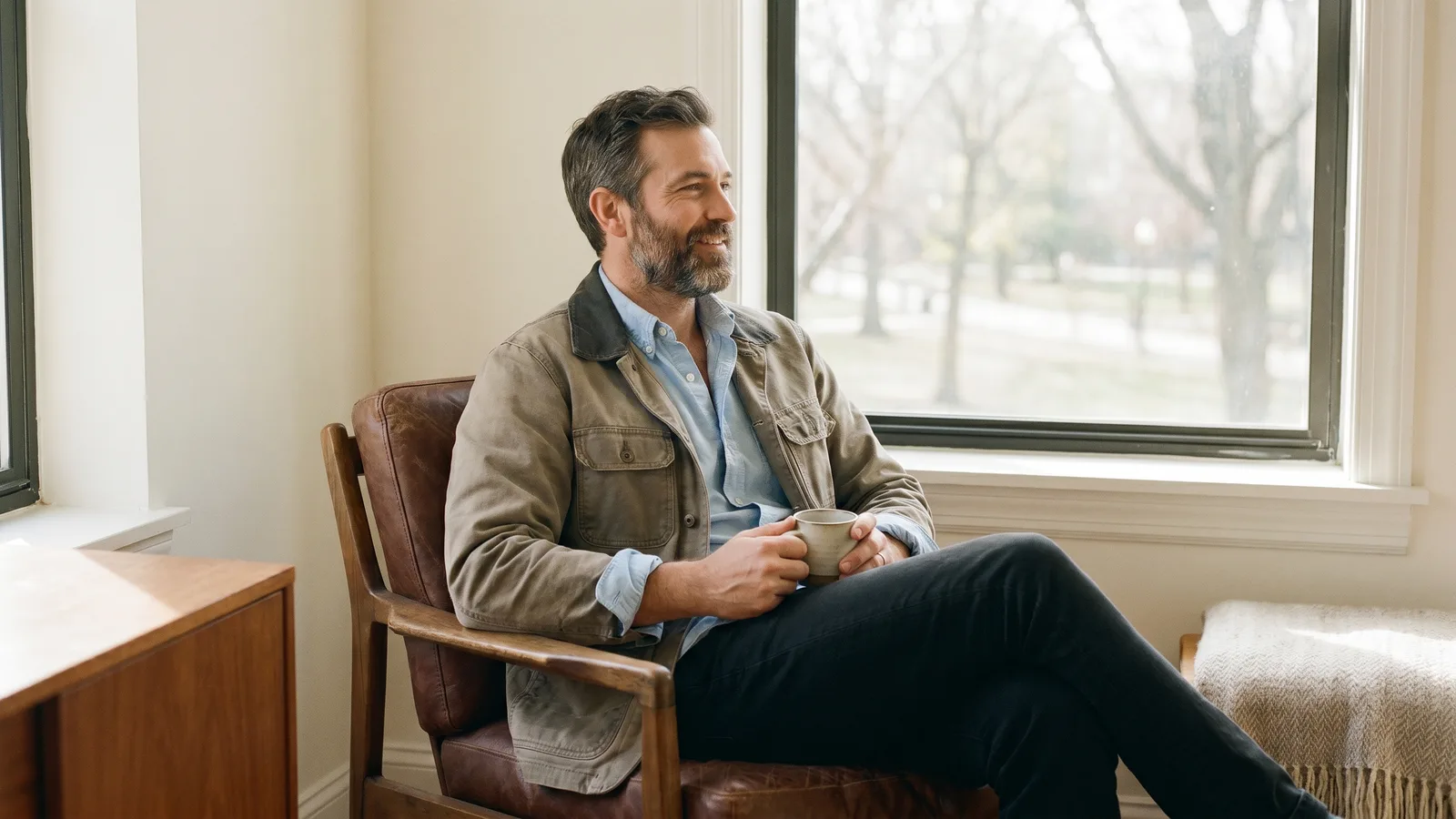
The shirt is fine. The way you’re wearing it isn’t
If you searched how to wear a dress shirt casually, you’ve probably already had the experience that prompts the question: you put on a perfectly good shirt, look in the mirror, and feel like you’re either about to give a deposition or just escaped a wedding. It is a common lament online: you want to wear nicer, more dress-clothes-style shirts, but you keep ending up looking overdressed.
The shirt isn’t the problem. Dress shirts are some of the most versatile garments you own. The problem is that most men only ever wear them one way — buttoned to the throat, tucked, often with a tie — and that single styling is what reads as formal. Strip those signals away and the same shirt becomes weekend-appropriate.
This piece is about exactly how to do that, drawing on the small set of moves that change how a shirt reads. For the bigger picture on shirts in a business-casual wardrobe, the Shirts pillar guide covers the full range.
The four moves that take a shirt casual
There are really only four levers, and you can pull them in any combination. Each one removes a formal signal.
1. Lose the tie and open the collar
The single biggest formality marker on a shirt is a buttoned collar with a tie. Remove the tie and undo the top button and the whole thing relaxes instantly. This is the open-collar look, and it’s the foundation of dressing a shirt down.
One undone button is enough for most settings — it looks intentional rather than disheveled. The trade-off worth knowing: some shirts have a soft collar that collapses the moment there’s no tie holding it in place, leaving you with a limp, sad neckline instead of a clean open one. A collar with some structure to it sits up on its own. If you wear shirts open-necked often, that detail matters more than almost anything else; we get into it in the collared-shirt guide.
2. Roll the sleeves
Rolling your sleeves is the fastest way to signal “I’m not at work.” Two clean folds to just below the elbow is the classic version. Don’t scrunch them up your forearm in a hurry — take a second and make the folds even. A neat roll looks deliberate; a sloppy one looks like you were doing dishes.
This move does a lot of quiet work. It shows forearm, which breaks up the buttoned-up vertical line of a shirt, and it pairs naturally with a watch.
3. Decide on the tuck — and commit
Half-tucked is the most common mistake. Either tuck fully or leave it fully out; the in-between looks accidental.
Most traditional dress shirts are built to be tucked. They’re long, with a curved “fish tail” hem designed to stay anchored in trousers. Worn untucked, that long curved tail hangs well below your fly and flaps at the sides, which is the clearest sign a formal shirt is being worn wrong. If you want the untucked look, you want a shirt whose hem sits around the middle of your fly and runs roughly straight across. When in doubt, tuck it.
4. Change what’s below the belt
A shirt takes most of its cues from what it’s paired with. The same white shirt reads completely differently over suit trousers than over dark jeans. Swap formal trousers for chinos or clean denim and you’ve done half the work without touching the shirt.
What to pair it with

Jeans. The most reliable casual pairing. Go for darker, clean denim with no rips or heavy fading. A crisp light blue or white shirt over dark jeans is close to foolproof. Keep the shirt slim enough that it doesn’t balloon out over the waistband.
Chinos. A notch dressier than jeans, a notch more relaxed than suit trousers — the natural middle ground. Stone, navy, and olive all work. This is the combination that looks pulled-together without looking like you’re working.
Shorts. Possible in genuinely casual, warm-weather settings, but the bar is higher. Tailored shorts that hit just above the knee, an untucked shirt cut for it, and sleeves rolled. Avoid baggy cargo shorts; the contrast with a crisp shirt fights itself.
Color and pattern do half the styling
A shirt’s fabric and color tell people how formal it is before you’ve styled anything.
- Crisp white poplin is the most formal-leaning. It can absolutely go casual, but it needs the most help from rolled sleeves and an open collar.
- Light blue is the easiest all-rounder. It reads slightly less formal than white out of the box and flatters most complexions.
- Oxford cloth has a subtle texture and a bit of weight, which makes it look relaxed even when it’s pressed. An oxford-cloth button-down is arguably the most natural casual dress shirt there is.
- Subtle patterns — fine checks, light stripes, a soft gingham — read more casual than solids and break up the formal look. Loud novelty prints are a different category and a different decision.
If a shirt only ever feels formal to you, the fastest fix is often switching from smooth white poplin to a textured oxford or a soft check. The styling barely changes; the read does.
Fit is what separates “casual” from “sloppy”
This is the part most men get wrong. There’s a real difference between a shirt that’s relaxed and one that’s just too big.
A common complaint is the dress shirt that billows — too much fabric through the body that puffs out the moment it’s untucked, or a collar so loose it gapes. Casual doesn’t mean baggy. The shirt should follow the line of your torso without pulling, the shoulder seam should sit at the edge of your shoulder, and the sleeves should end at your wrist bone before you roll them.
If your shirts are too big, you have two options: get them taken in at the body by a tailor, which is cheap and transformative, or buy the next size down and a slim or tailored cut. A well-fitting shirt worn casually always beats an expensive one worn loose.
When a dress shirt is the wrong call
Worth saying plainly: not every casual setting wants a dress shirt, and forcing one can read as overdressed. For a low-key hangout or a genuinely relaxed weekend, a polo or a good t-shirt may simply fit better. The dress shirt earns its place when you want to look like you made an effort without looking like you’re in costume — dinner out, a date, drinks after work, meeting someone’s parents, travel.
The short version
Take the tie off. Open one button. Roll the sleeves. Commit to the tuck — usually out for casual, but only if the shirt is cut for it. Put it over jeans or chinos. Reach for textured fabrics and easy colors over stiff white poplin. And get the fit right, because a relaxed shirt and a baggy one are not the same thing.
Do those, and the shirt you thought only worked at the office becomes one of the most useful things you own. If you want to go deeper on the warm-weather and cool-weather versions of this, see long-sleeve casual dress shirts and the broader rundown of shirts worth owning.